What Is the Best Paver Material for South Florida? Materials Compared
Concrete, travertine, porcelain, shellstone, clay, or marble? A South Florida homeowner's guide to choosing the right paver material for a driveway, patio, or pool deck.
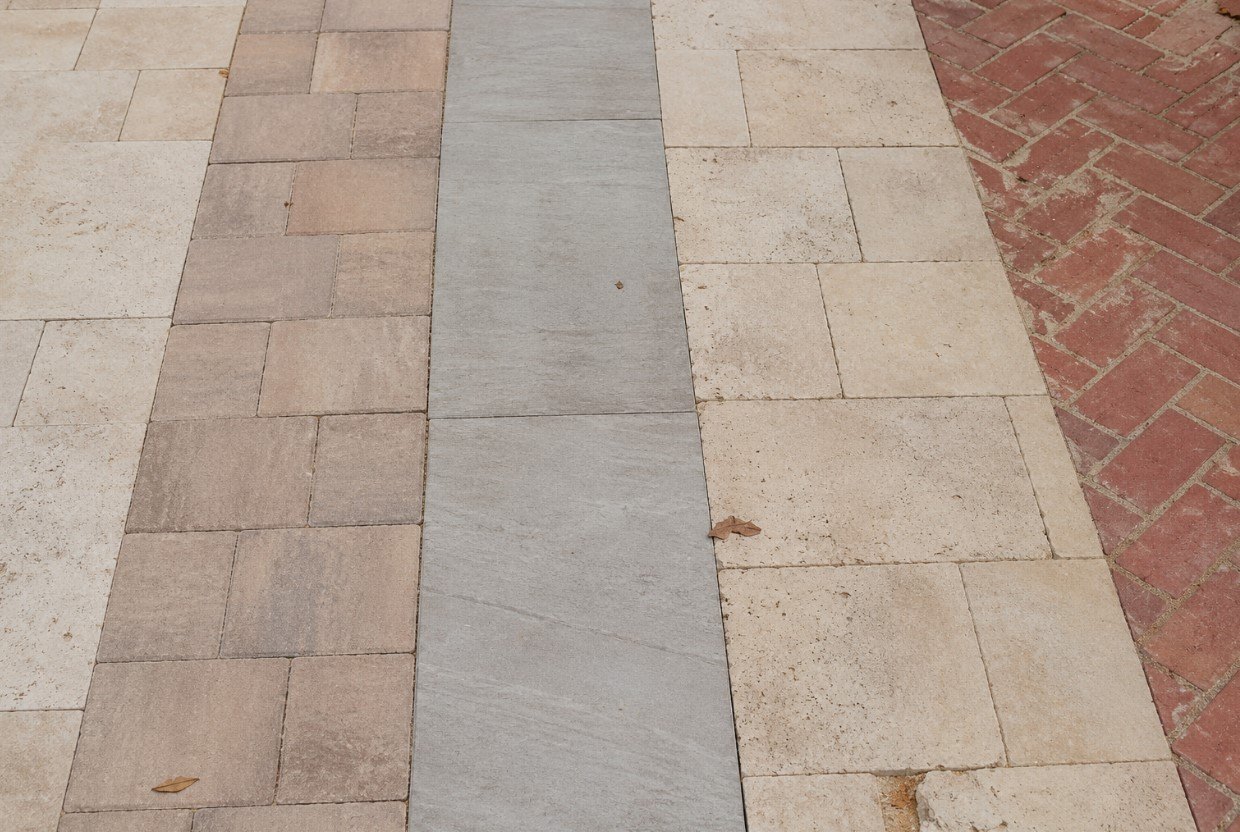
The material you choose is the biggest single decision you make when you plan a paver project. It sets the look, the feel underfoot, the upkeep, and how the surface handles South Florida sun, rain, and salt air for the next few decades. There is no single best paver for every home, but there is a best one for your project, and it comes down to matching the material to where it goes and how you want it to look. This guide walks through the main options, what each is good and bad at, and where to read more on the ones that interest you.
Concrete pavers
Concrete pavers are the most common choice, and for good reason. They are made in a huge range of shapes, colors, and finishes, they cost less than most natural stone, and modern ones are engineered to hold up for decades. You can get a concrete paver that mimics tumbled stone, clean modern slabs, or classic brick.
The trade-off is color. Concrete is pigmented, and after many years of strong sun the color can soften, which is one reason sealing is worth considering. If you want a specific look on a sensible budget, concrete is usually where to start. Our comparison of pavers versus poured concrete covers why either kind of paver beats a slab in our climate.
Travertine
Travertine is a natural stone and a South Florida favorite for pool decks. It stays noticeably cooler underfoot than most surfaces, it has a soft, high-end look, and each piece carries its own natural variation. It handles our heat and sun well and ages with character rather than looking worn.
Because it is a natural stone with some porosity, travertine likes to be sealed now and then and cleaned of organic staining. If a cool, resort feel around the pool is the goal, it is hard to beat. We compare it directly against porcelain in travertine versus porcelain pavers.
Porcelain
Porcelain pavers are the low-maintenance modern pick. They are extremely dense, which makes them highly resistant to stains, fading, scratches, and pool chemicals, and they ask almost nothing of you over the years. Large-format porcelain in particular gives that clean, contemporary look of big rectangular slabs with very thin joints.
The surface does not fade, so the color you install is the color you keep. The main considerations are that porcelain needs skilled installation and the material itself costs more than basic concrete. If you want modern looks and the least possible upkeep, start with large-format porcelain pavers.
Shellstone and coquina
Shellstone, sometimes called Florida keystone or coquina, is a local coastal stone full of tiny shell and coral fragments. It reads as unmistakably South Florida, with a light, sandy tone that reflects heat and suits coastal and Mediterranean homes. Its light color keeps it comfortable underfoot in full sun.
Like other natural stones it is porous and benefits from sealing, and its softer surface gives it a barefoot-friendly texture around pools. If you want a material with a genuine local sense of place, read more on shellstone pavers.
Clay brick
Clay brick pavers are the traditional option, and their biggest advantage is color that never fades. Because the color runs all the way through fired clay rather than sitting in pigment, a brick driveway looks the same in thirty years as it did on day one. The classic red and charcoal tones suit colonial and traditional homes.
Brick comes in fewer shapes and sizes than concrete, and the look is firmly traditional rather than modern, so it fits some homes far better than others. If timeless curb appeal is what you are after, brick earns its place.
Marble
Marble pavers sit at the luxury end, usually reserved for pool decks and formal patios where the budget allows. A honed marble deck stays cool underfoot and gives a bright, elegant, high-end finish that few other materials match.
Marble is the softest and most stain-sensitive of the stones here, so it wants careful sealing and prompt cleaning, and it is best kept away from heavy vehicle traffic. In the right setting it is stunning. In a busy driveway it is the wrong tool.
How to choose
The choice gets simpler when you work backward from the surface and the look:
- For a driveway, prioritize strength and low fuss. Concrete pavers and clay brick both carry vehicle loads well and last for decades.
- For a pool deck, prioritize a cool, non-slip surface. Travertine, shellstone, and honed marble all stay kinder underfoot in full sun.
- For a modern patio, large-format porcelain gives the clean slab look with the least maintenance.
- For a traditional home, clay brick or tumbled concrete suits the architecture.
- On a tighter budget, quality concrete pavers give you almost any look for less.
Whatever the material, remember that the surface only lasts as long as what is under it. A premium stone over a poor base still fails, which is why how long pavers last depends far more on the installation than on the paver. For the full picture, from materials to color to care, start with our complete guide to pavers in South Florida.
The bottom line
Match the material to the job. Concrete for value and versatility, travertine and shellstone for cool coastal pool decks, porcelain for modern and low upkeep, brick for timeless curb appeal, marble for luxury. Get the base and the installer right, and any of them will serve you well for decades.
Not sure which fits your home and budget? Reach out for a free on-site visit and we will walk the options with you in person.