Travertine vs Porcelain Pavers: Which Is Right for Your South Florida Home?
Travertine and porcelain are both premium paver choices for South Florida. A side-by-side look at how they compare on looks, heat, durability, and upkeep.
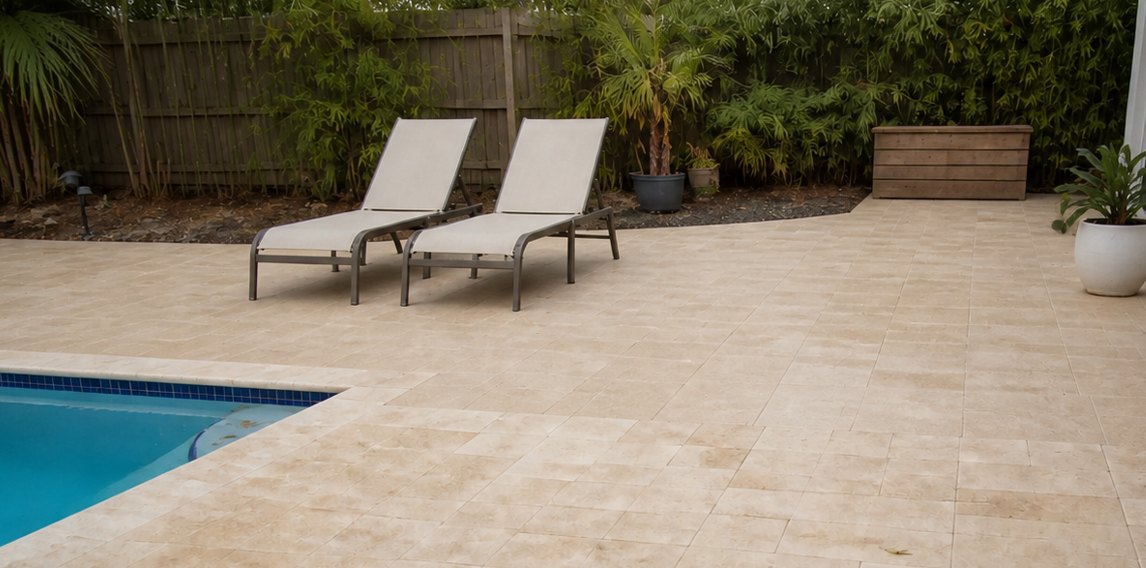
If you are choosing a premium surface for a pool deck, patio, or driveway in South Florida, two names come up again and again: travertine and porcelain. Both are beautiful, both perform well in our climate, and both cost more than a basic concrete paver. Yet they are fundamentally different materials, and the right one for your project depends on the look you want and how much upkeep you are willing to do. This guide compares them honestly, side by side, so you can choose with confidence. For how they fit among all the options, see our guide to the best paver material for South Florida.
What each material actually is
Travertine is a natural stone, a form of limestone quarried from the earth and cut into pavers. Every piece is slightly different, with the soft, organic veining and warm earth tones that only nature produces. It has been used in architecture for thousands of years, which is part of its timeless appeal.
Porcelain is a manufactured product, made from refined clays fired at extremely high temperatures until the material becomes dense and glass-hard. Modern porcelain pavers can be printed to convincingly mimic natural stone, wood, or concrete, and they arrive perfectly uniform in size and color. For a deeper look at this newer option, see our guide to large-format porcelain pavers.
Looks and feel
This is where personal taste leads. Travertine gives you genuine natural variation, a warm and slightly textured surface that feels grounded and classic. No two installations look exactly alike. It suits Mediterranean, coastal, and resort-style homes beautifully, and its cousin shell stone shares that same natural character, which we cover in our article on shell stone pavers.
Porcelain, by contrast, offers precision and consistency. If you want clean lines, a contemporary look, large-format tiles with tight joints, or a specific color that never varies, porcelain delivers it. It can look like stone from a few feet away while behaving like a high-tech material underfoot.
Heat underfoot
In South Florida this matters, especially around a pool. Travertine is naturally cool underfoot, one of the main reasons it has long been a favorite for pool decks. Porcelain also stays reasonably cool, though it depends heavily on color, since darker porcelain absorbs more heat. For a barefoot pool surround, both can work, with lighter tones performing best.
Durability and porosity
Here porcelain has a clear technical edge. It is extremely hard, highly scratch resistant, and almost completely non-porous, which means it resists stains, fading, and the effects of pool chemicals and salt air with very little effort. It does not need sealing.
Travertine is durable in the sense that stone lasts for generations, but because it is a natural stone it is more porous and softer. It can absorb stains, etch from acidic spills, and show wear over time if it is not cared for. None of this is a dealbreaker, it simply means travertine asks for a bit more attention.
Maintenance
If low maintenance is your priority, porcelain is hard to beat, since routine cleaning is essentially all it needs. Travertine rewards a little more involvement: it should be sealed periodically to protect against stains and moisture, and it benefits from the same clean-and-seal care that keeps any natural surface looking its best. Both are manageable, but they ask for different levels of ongoing effort.
Which works best where
For pool decks, travertine is the timeless, cool-underfoot classic, while porcelain is the modern, ultra-low-maintenance alternative. For patios, both excel, and the choice comes down to whether you want natural warmth or contemporary precision. For driveways, thickness and load rating matter most; porcelain pavers made for vehicular use and properly installed perform well, as does a robust travertine installation over the right base. Our natural stone service and pool deck installations cover both materials in practice.
The bottom line
Neither material is better in the abstract. Travertine wins on natural beauty, cool comfort, and timeless character, at the cost of a little more upkeep. Porcelain wins on toughness, consistency, and near-zero maintenance, at the cost of the organic warmth only real stone has. Choose travertine if you love the look and feel of natural stone and do not mind sealing it now and then. Choose porcelain if you want a flawless, modern, worry-free surface.
Whichever direction appeals to you, the base and installation matter just as much as the material, which is why it helps to plan the whole project properly from the start. Our complete guide to pavers in South Florida walks through the bigger picture, and when you are ready to see samples and talk specifics, you can request a free on-site visit and we will help you choose the right surface for your home.