How Long Do Pavers Last? A South Florida Homeowner's Guide
How long do pavers last in South Florida? Often 30 to 50 years or more, if they are installed and cared for right. What shortens their life, and how to extend it.
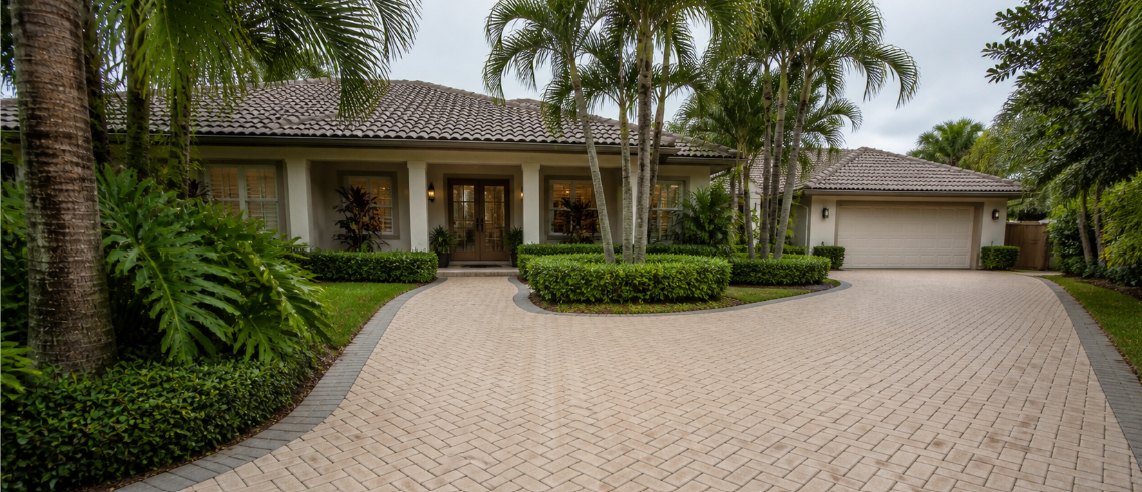
When you invest in a paver driveway, patio, or pool deck, the natural question is how long it will actually last. The reassuring answer is that pavers are one of the longest-lived outdoor surfaces you can choose. A well-built paver installation commonly lasts 30 to 50 years, and natural stone can last far longer than that. But the number is not fixed. It depends far more on how the surface is built and cared for than on the pavers themselves. This guide explains what really determines the lifespan of pavers in South Florida, and how to get the most years out of yours.
The short answer, by material
Lifespan varies by the material you choose:
- Concrete pavers typically last 25 to 50 years or more. They are engineered for exactly this kind of long service.
- Natural stone, such as travertine, is stone that has already existed for thousands of years, so as a surface it can last 50 to 100 years or beyond with care. Our comparison of travertine and porcelain pavers looks at how each holds up.
- Porcelain pavers are extremely dense and fade resistant, and are built to last for decades with almost no change in appearance.
Compare that to a poured concrete slab, which usually starts cracking and staining within 25 to 30 years and cannot be repaired invisibly. Pavers routinely outlast it, which is one of the central points in our guide on pavers versus concrete.
What actually determines how long pavers last
The material sets the ceiling, but four other factors decide whether you reach it.
Installation quality, the biggest factor by far. A paver surface is only as durable as the base beneath it. Proper excavation, a compacted stone base of the right depth, edge restraints around the perimeter, and drainage that carries water away from the house are what keep the surface flat and locked together for decades. Cut corners here and even premium pavers will sink, shift, and separate within a few years. Nothing else on this list matters as much.
Climate. South Florida is demanding. Intense sun can fade color over time, heavy seasonal rain tests drainage, coastal salt air is corrosive, and sandy soil moves. These conditions do not shorten the life of a well-built, well-drained installation much, but they punish a poorly built one quickly.
Maintenance. Pavers are low-maintenance, not no-maintenance. Periodic cleaning and sealing, roughly every 12 to 18 months, protects color and locks the joint sand in place, which prevents the slow erosion that ages a surface prematurely.
Use and load. A pedestrian walkway sees gentle wear. A driveway carrying vehicles every day works much harder, which is why paver thickness and base depth are matched to the load.
Why pavers outlive most surfaces
The reason pavers last so long comes down to how they are built. A paver surface is many individual units set over a flexible base, so it moves with the ground instead of fighting it. That flexibility is why pavers resist the cracking that ruins rigid concrete slabs here. And when something does go wrong, a single stained or settled paver can be lifted and replaced with no visible patch, so the surface is repaired rather than replaced. A slab, by contrast, has to be broken out and repoured, patch and all.
The South Florida factors to watch
A few local realities are worth understanding so they do not surprise you. New pavers sometimes show a temporary white haze called efflorescence in their first weeks, which is normal and fades on its own, as we explain in our article on efflorescence on pavers. Rich colors can lighten under years of strong sun, which sealing slows. And because our soil is sandy and rain is heavy, drainage and edge restraints are not optional details here, they are what protect the whole installation over the long run.
How to get the most years out of your pavers
Getting to the top of the lifespan range is straightforward:
- Insist on a proper installation. The base, drainage, and edge restraints decide everything. A transparent estimate should spell them out.
- Seal and clean on schedule. Every 12 to 18 months protects color and joints.
- Address small problems early. Re-level a settled paver or refill washed-out joints before they spread.
- Match the pavers to the use. The right thickness for a driveway is heavier than for a patio.
- Choose quality materials suited to our climate.
Do these, and a paver surface easily reaches the upper end of its life, often outlasting the roof over the house.
A long-term investment
Because they last so long and can be repaired rather than replaced, pavers are one of the most durable improvements you can make to a home, and that longevity is a real part of their value at resale. For the full picture of choosing and caring for a surface built to last, see our complete guide to pavers in South Florida. And when you are ready to plan a project done right from the base up, you can request a free on-site visit and we will walk you through the details.