Choosing a Paver Sealer Finish: Approve a Test Area First
Choose a finish for concrete pavers by comparing cured color and sheen on your own property, checking coating compatibility and recording a clear approval scope.
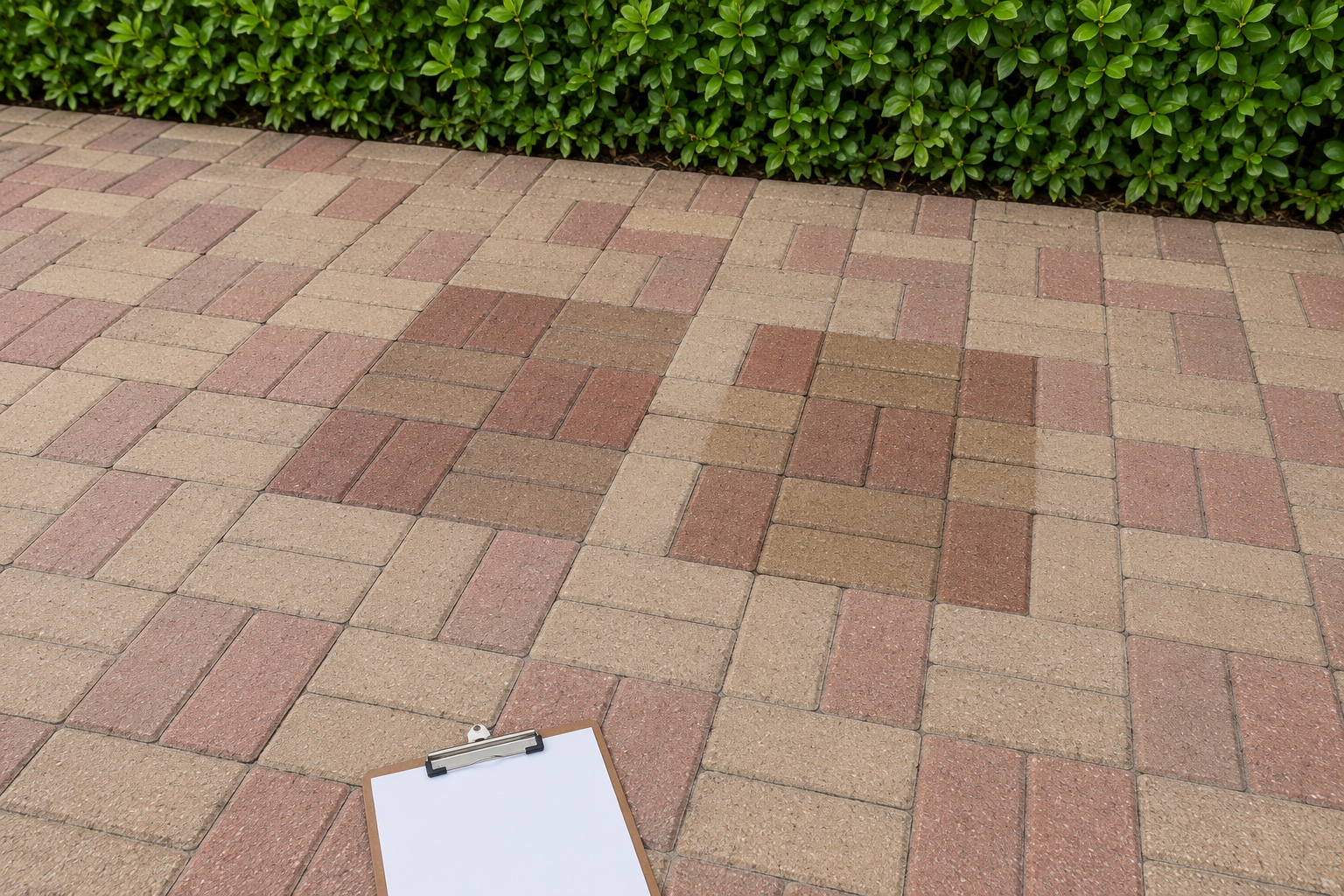
AI illustration: conceptual finish trials, not a real project or test result.
Choose a sealer finish for concrete pavers by approving a small prepared test area on your own surface before authorizing the full treatment. Judge color enhancement and sheen separately, after the selected product has cured sufficiently for assessment under its manufacturer’s guidance. Confirm compatibility with any previous coating, and put the accepted appearance and preparation in writing. A finish name, a photograph or freshly wet pavers cannot establish the cured result at your home.
For paver cleaning and sealing in Palm Beach Gardens, the useful starting point is your existing concrete pavers, their treatment history and the appearance you want to live with.
Separate richer color from a shinier surface
Color enhancement concerns how deep or saturated the pavers look. Sheen concerns reflected light. You might want the muted reds in a driveway to read more clearly while keeping reflections subdued. Describe those preferences separately so that “richer” does not become an accidental request for “glossier.”
CMHA’s Cleaning, Sealing and Joint Sand Stabilization of Interlocking Concrete Pavement explains that most sealers darken or enhance paver color, while finishes range from glossy to low sheen or flat. It also advises consulting the manufacturer about suitability for the intended environment and following product directions. That range makes the actual surface a better approval reference than a finish category alone.
Look at the entire color blend, including borders. A change you enjoy on a red unit may make a pale border more prominent than you expected. Decide which relationship matters: preserving the existing contrast, bringing out subdued colors or keeping the overall surface visually quiet.
If you have not decided whether sealing belongs in the project, our guide to whether pavers need to be sealed addresses that earlier decision.
Read beyond the finish name
The PRO Natural 1K product guidance describes a natural, low-sheen finish with limited color enhancement. It also warns that coatings can alter traction, especially when wet, and calls for a small-area compatibility and adhesion test before sealing over an existing coating. This is a product-specific example of why an appealing finish label does not answer every suitability question. It is not a product recommendation or a statement that our company uses it.
Keep appearance approval separate from the professional’s suitability assessment. A pleasing sample does not establish wet traction. Ask the installer to check the proposed system’s current specifications and appropriate testing for the intended use, particularly where rain or irrigation reaches a walkway. Do not rank traction by how matte or glossy a finish looks.
Bring old invoices or product information if available. If the previous coating is unknown, record that uncertainty instead of choosing a new product on appearance alone.
Agree on a representative test area
Ask the installer to propose a small test area and obtain your consent before treating it. Agree on the location, preparation and product first. Also discuss what happens to that patch if you reject the result; do not assume a trial can simply disappear.
Choose an area that includes the colors and surface conditions relevant to your decision. A convenient hidden corner may miss the worn center of a driveway or a contrasting border. Where existing pavers differ substantially, ask whether one test adequately represents the included areas.
The trial should reflect the preparation proposed for the job. Comparing a cleaned and sealed patch with dirty surrounding pavers combines several changes at once. Ask the installer to explain which visible improvement comes from cleaning and which comes from the finish, using a suitably prepared comparison area where practical.
If your property has an HOA, ask your own association whether the proposed color or finish change needs review. Confirm whether review is needed before authorizing the test itself. A neighbor’s past project does not establish your current requirements.
Review the cured appearance in everyday views
Agree with the installer when the selected product can be assessed and when access is permitted. Avoid judging an unfinished stage or assuming every product follows the same schedule. Once assessment is appropriate, compare the trial from the places where you normally see the surface:
- From the entry or driveway approach, judge the overall color balance and border contrast.
- From a seated patio view, look for reflections that attract more attention than you want.
- In ordinary daylight and shade, decide whether the finish remains acceptable as the light changes.
Photographs can document the agreed area and help explain preferences. Phone screens, exposure settings and reflections make them imperfect color references. Pouring water over pavers is also no substitute for viewing the actual cured system.
Write down a specific response: color acceptable, reflection too noticeable, border too dark, or variation still unresolved. Specific observations give the installer something useful to assess before a larger commitment.
For help defining that commitment, request a site assessment through our paver cleaning and sealing service. Ask for a proposed preparation and finish-review process, including whether a test area is appropriate and what it would involve before authorizing treatment.
Put the finish decision in writing
The approval should connect the sample you saw to the work being proposed. A short written record is more useful than “natural finish approved” on its own. Include:
- Included pavers: Identify the driveway, patio, borders or other concrete areas covered, plus any excluded sections.
- Existing coating: Record the known product and history, or explicitly mark them unknown, with the assessment needed before proceeding.
- Test reference: Identify its location, selected product, intended finish and preparation, along with the date you reviewed its cured appearance.
- Acceptance: Describe the color enhancement and reflection you accepted, the variation discussed and any concerns still awaiting resolution.
- Work boundaries: State the proposed cleaning, joint work and sealing, with repairs or old-coating removal identified separately where needed.
Keep photographs with this record as supporting documentation. If the proposed product or preparation changes, revisit the approval reference before extending the treatment. The original patch no longer answers exactly the same question.
Compare proposals against these same boundaries. Ask whether the test, preparation and any additional work are included or require separate agreement. Sealer should not be sold as a substitute for cleaning, restoration or repairs the surface needs.
If your plans also include replacing a patio or rebuilding a walkway, the paver services available in Palm Beach Gardens help distinguish those construction scopes from maintenance of the existing surface.
Use your own approved test area
Your own approved test area should guide the appearance decision for your property. Record the sealer, preparation and agreed finish rather than relying on a photograph from a different installation.
Make the final decision before full treatment
Proceed when the appearance is acceptable, the installer has resolved suitability questions and the written scope matches the trial. If you dislike the color shift or reflection, pause and discuss another suitable option. Do not rely on an undefined promise that the whole surface will look better.
To plan the next step, request a paver cleaning and sealing assessment in Palm Beach Gardens. Describe your preferred color and sheen, share any coating history, and ask for the proposed preparation, compatibility checks and finish-approval process in the written scope.
If an existing finish appears to be lifting or flaking, start with our peeling paver sealer assessment guide before considering another coat.
For green-looking areas in shade, first review our green patches on shaded pavers guide to separate cleaning, site assessment and finish decisions.
If the main concern is a dull or uneven color, first consider what to check before a color-enhancing paver sealer to decide whether a finish change belongs in the project.