Do Pavers Need to Be Sealed? A South Florida Homeowner's Guide
Do pavers need to be sealed? No, sealing is not required, but it protects color and joints. When to seal, when to skip, and how often, for South Florida homes.
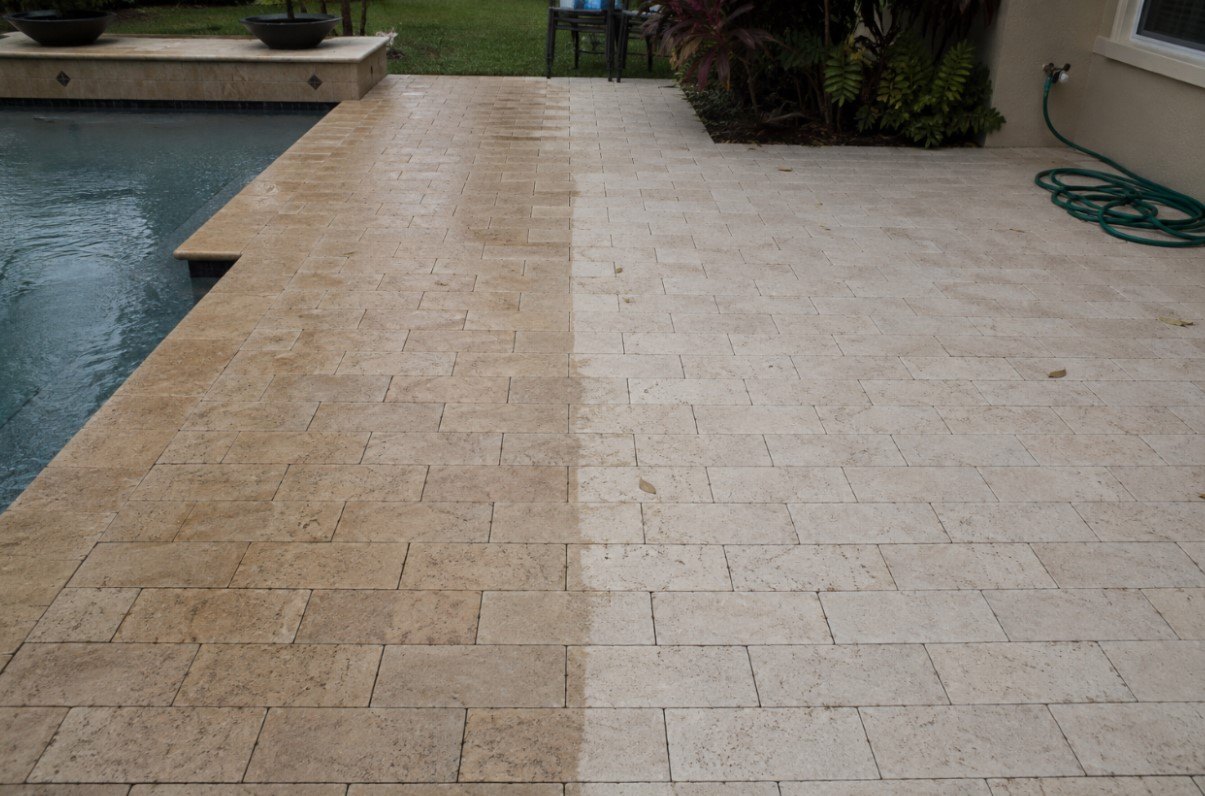
Sealing is one of the first questions homeowners ask after a new driveway or pool deck goes in. The short answer is no, pavers do not need to be sealed to function. A well-built paver surface will last for decades whether you seal it or not. Sealing is a choice about how the surface looks and how much upkeep you want to do, not a requirement for it to hold together. Here is what sealing actually does, when it is worth it, and when you can skip it.
What sealing actually does
A sealer is a liquid coating that soaks into the paver and the joint sand between them. Once it cures, it does a few practical things:
- It slows down staining. Oil, rust, leaf tannins, and barbecue grease sit on the surface longer instead of soaking straight in, so you have time to clean them up.
- It locks the joint sand in place. The sand between pavers is what keeps them from shifting, and a sealer helps hold it against wind, rain, and pressure washing.
- It deepens the color. Most sealers bring out the natural tone of the stone, and some add a light sheen if you want one.
- It makes routine cleaning easier, because dirt has less to grip.
What sealing does not do is hold the pavers together or fix a bad installation. The strength comes from the base and the joint sand, not the coating on top.
The case for sealing
In South Florida, the reasons to seal are mostly about sun and water. Strong UV fades color over the years, and a sealer with UV protection slows that. Frequent rain and pool splash-out wash joint sand out of the gaps, and sealed joints hold up better. If you have a light travertine pool deck or a warm-toned driveway you picked specifically for its color, sealing helps keep that color looking new for longer.
Sealing also helps in high-stain spots. A driveway that catches engine drips, or a patio under a mango tree, stays cleaner and wipes up easier when it is sealed.
The case for skipping it
Sealing is not free and it is not permanent. A few honest downsides:
- It wears off. A sealer lasts roughly two to five years depending on the product and the traffic, so it is a repeating cost, not a one-time job.
- The wrong sealer, or sealing too soon, can trap moisture and cause a cloudy white haze. New pavers usually need to cure and fully dry out first, often several weeks to a couple of months.
- A sealer can change wet traction, which matters around a pool. A matte finish or a penetrating label is not a guarantee that the finished surface will be slip-resistant.
If you like the natural, matte look of unsealed stone, and you are fine cleaning the surface once or twice a year, leaving pavers bare is a perfectly valid choice. Plenty of beautiful South Florida patios are never sealed at all.
The two types of sealer
Most products fall into one of two families, and the difference matters.
Penetrating sealers soak into the paver rather than forming a coating on top. Some preserve a natural, matte appearance while allowing moisture vapor to escape. Choose a product approved for the actual material, including travertine where applicable, and check its wet-traction guidance. Do not assume that every penetrating sealer makes a pool deck safe when wet.
Film-forming (topical) sealers leave a surface coating, often with a satin or glossy finish. They can enhance color and help resist stains, but performance depends on the product, the surface and the application. Excess coating can make a surface slippery. Check suitability for the intended use rather than choosing by sheen alone.
The CMHA cleaning and sealing guide advises consulting the manufacturer about wet and dry slip resistance. Product-specific wording matters: the Techniseal iN technical sheet describes a penetrating product that will not make the surface more slippery and calls for a small test area. That is different from promising a slip-proof surface. Ask your contractor to assess a cured test area on your pavers and follow the selected product’s instructions.
When to seal, and how often
Timing is the part people get wrong most often. A few simple rules:
- On new pavers, wait until they have fully cured and dried. Sealing too early is the usual cause of that milky haze. When in doubt, wait longer.
- Always clean and let the surface dry completely first. Sealing over dirt or damp sand locks the problem in.
- Reseal every two to five years, or when water stops beading and the color starts to look flat.
Natural stone and porcelain each behave a little differently, and our guide to travertine and porcelain pavers covers how each material handles sun and upkeep over time.
Does sealing change how long pavers last?
Not really. The lifespan of a paver surface comes from the base, the edge restraint, and the joints, which is the same set of things we cover in how long pavers last. Sealing protects appearance and makes maintenance easier. It is a cosmetic and convenience upgrade, not a structural one. A sealed surface and an unsealed one, both built well, will both be here in thirty years.
The bottom line
Pavers do not need to be sealed. They need a solid base and full joints, and those are set the day they go in. Seal them if you want richer color, easier cleaning, and better protection against sun and stains, and you do not mind redoing it every few years. Skip it if you prefer the natural matte look and a simpler routine. Either way is fine.
If you are planning a new driveway, patio, or pool deck in South Florida, or wondering whether your current one is due for a reseal, reach out for a free on-site visit. We will look at your surface and tell you honestly what it needs.