Peeling Paver Sealer: What to Check Before Another Coat
Before recoating pavers, identify the material and old finish, assess a professional trial area, and separate coating work from repairs in your proposal.
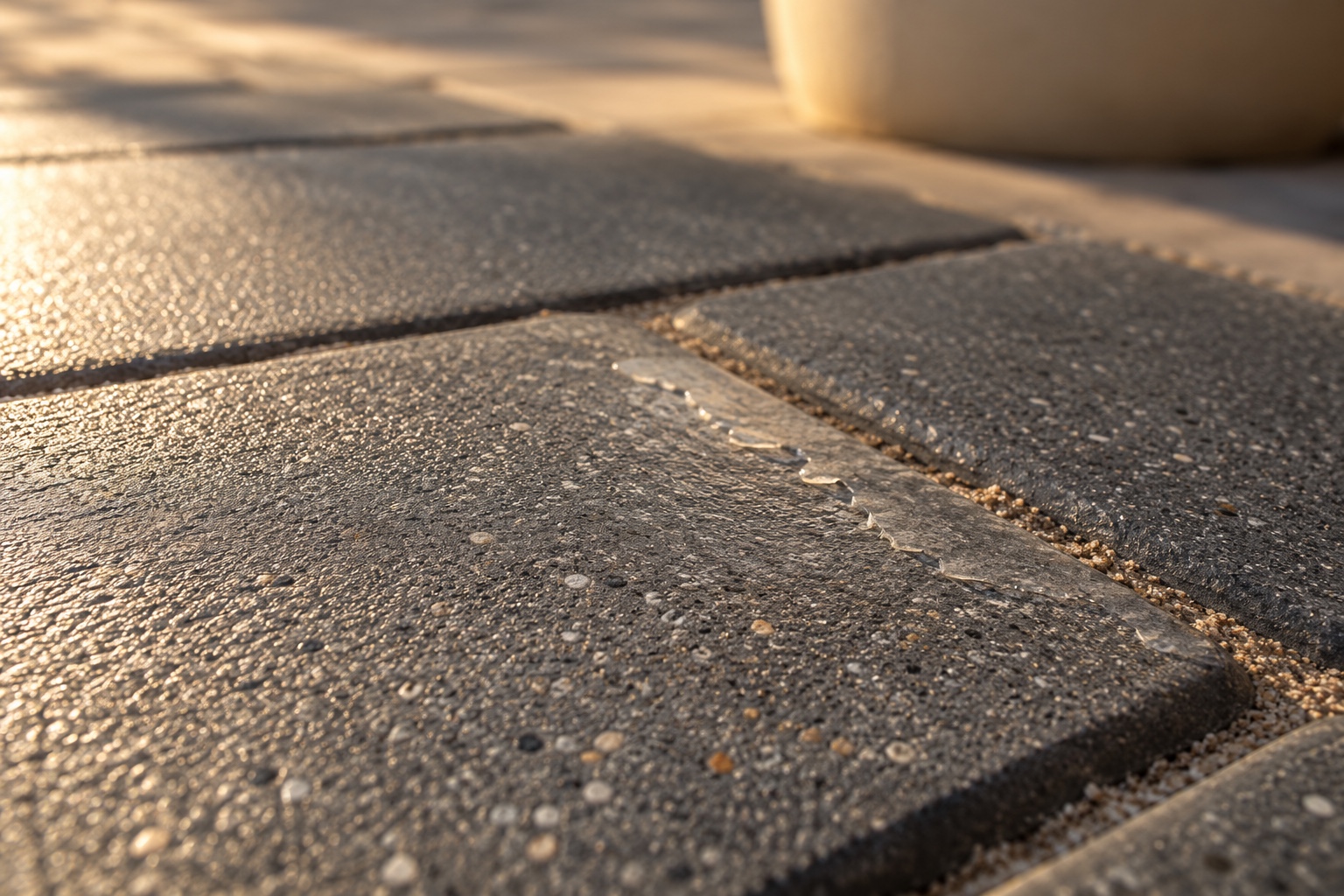
If your pavers appear to have peeling sealer, pause before authorizing another coat. Have a professional identify the paver material and existing treatment, review the affected areas, and establish whether the visible change belongs to a coating or the surface beneath it. A photograph cannot establish moisture trouble or incompatible chemistry. The next decision is the scope: cleaning alone, evaluation of old-coating removal, separate repairs, or a suitable new finish after assessment. Recoating should follow that decision.
For paver cleaning and sealing in Palm Beach Gardens, bring the conversation back to what is actually on your property. A proposal should describe that surface before naming the treatment to buy.
AI-generated illustration: a conceptual worn coating edge on concrete pavers, not completed work or evidence of a particular cause.
Identify what you are looking at
Peeling is a useful description of what caught your eye, but it is not yet a diagnosis. Tell the assessor whether you see a lifting edge, scattered flakes, or an uneven-looking patch. Keep the description separate from an explanation of why it happened.
Do not assume every sealer forms a surface film. Gather the original material information and any finish records. If a border or adjoining area differs from the main field, identify it separately; our guide to cleaning stone beside concrete pavers explains how to organize that mixed-material assessment.
For concrete pavers, CMHA’s Cleaning, Sealing and Joint Sand Stabilization of Interlocking Concrete Pavement emphasizes identifying stains, testing products, preparing surfaces before sealing, and following product guidance. Confirm compatibility for the specific product, material and existing treatment. These concrete recommendations are not chemical directions for natural stone.
An unidentified finish belongs on the proposal’s unresolved-items list. Ask what information the contractor needs before recommending work, and whether the initial visit can resolve that question or requires further evaluation.
Build a history the assessor can use
Collect invoices, product names, application dates and the names of previous contractors. Record which areas received each treatment and whether anything was subsequently applied over it. Include cleaning history if known. Distinguish a confirmed product from something a previous owner merely remembers using.
Take an overview that locates the affected area, then closer views of its edges. Include an adjacent area that looks different. Note whether the concern is confined to a doorway, seating area, border or another recognizable part of the property. Those locations help organize the visit without pretending that a pattern proves its cause.
Write down when you first noticed the change and whether its extent has visibly changed since then. Preserve the original photographs so the assessor can compare the same locations. Avoid scraping or experimenting to make the surface easier to explain.
If records are missing, say so. A useful proposal identifies assumptions rather than presenting an unknown treatment history as a confirmed fact.
Separate the coating question from repairs
CMHA’s Operation and Maintenance Guide for Interlocking Concrete Pavement treats joint condition, movement and ponding as maintenance concerns alongside cosmetic cleaning. It places sealer application after stain removal and overall cleaning.
Record loose pavers or joint loss separately from the coating concern. Ask which findings need independent repair assessment, who will address them, and whether that work changes the proposed sequence.
Choose the scope before choosing a finish
Ask for a recommendation tied to the findings, with alternatives where uncertainty remains. The choice should be understandable without knowing the name of a chemical or coating system.
| Possible scope | What to settle before authorization |
|---|---|
| Clean only | Which areas are included, what appearance is being addressed, and when the result will be reviewed. |
| Evaluate old-coating removal | Where the professional trial will occur, what it will assess, and what would stop further work. |
| Repair independently | Which findings receive a separate scope, who is responsible, and how the work will be coordinated. |
| Consider a new finish | What remains unresolved and what evidence is needed before adding that task. |
When comparing proposals, check whether each covers only the visible patch, the whole field or the border as well. Different boundaries mean different offers. Have the contractor mark the agreed extent on a photograph, and ask how discoveries outside it would be presented for your approval. Include transitions to areas that will remain untreated in that discussion.
Request a consultation through our paver cleaning and sealing service with your photographs and available product records. Use the site assessment to discuss these options and ask for a written recommendation that identifies what can be proposed now and what still needs evaluation.
Authorize a trial with a clear decision attached
A professional removal trial should have a defined purpose: evaluating whether the proposed work is feasible and what appearance you would be asked to accept. Agree on its location and boundaries before it begins. Ask why that location represents the area under discussion, particularly if another section has a different treatment history.
Set a review point after the trial. Discuss remaining visible coating, differences between treated and untouched areas, and any change you find unacceptable. Ask the contractor to explain what the trial establishes and what remains uncertain beyond its boundary.
Do not authorize the rest of the property simply because work has started in a small area. Request photographs and a written description of the trial outcome, then decide whether to proceed, change the scope or stop.
Complete removal and restoration of the original color should not be assumed. Record the limitations discussed before approval. If a trial leaves an appearance you would not accept across the larger area, resolve that concern before authorizing an extension.
Make the written scope specific to the material
An anonymous written scope for a Boynton Beach natural-stone pool deck named cleaning, re-sanding and sealing separately. Its relevance here is the itemization and identification of the material. It documents proposed work, not completion, peeling, chemical selection or coating removal.
Use that distinction when reviewing your own estimate. Each task should have an identifiable area and purpose. Avoid treating a broad service heading as evidence that removal, joint work or a new finish is included.
Ask how findings from the trial will change the proposal. Specify who approves additional work and whether any portion will remain untreated. For household planning, clarify access arrangements, furniture handling and who provides instructions for using the area again. Those responsibilities belong in the scope before scheduling.
Approve the appearance you will live with
If a new finish remains an appropriate option, describe what you want to retain about the pavers as well as what bothers you now. Discuss color and sheen separately. A request to look refreshed is too vague to serve as an approval standard.
The guide to reviewing a paver sealer finish test can help structure that conversation. Keep the removal assessment and finish approval identifiable in your records, even if they form part of the same project. Accepting the preparation result does not tell the contractor which final appearance you prefer.
Keep the revised proposal, accepted trial photographs and product information together. At handover, ask which areas received which work, what limitations remain, and whom to contact with later concerns.
For a consultation about cleaning and sealing pavers in Palm Beach Gardens, share the affected locations, known treatment history and the appearance you want to preserve. Ask for a visit to assess the surface and discuss a trial where needed, followed by an itemized proposal you can review before authorizing broader work.
If the surface looks sound but you have no product records, read our guide to resealing pavers with an unknown previous sealer before authorizing a new treatment.