Using Your Driveway After Paver Sealing: Plan the Return to Service
Plan parking and household access after concrete paver sealing. Separate foot and vehicle reopening, account for weather, and get clear installer instructions.
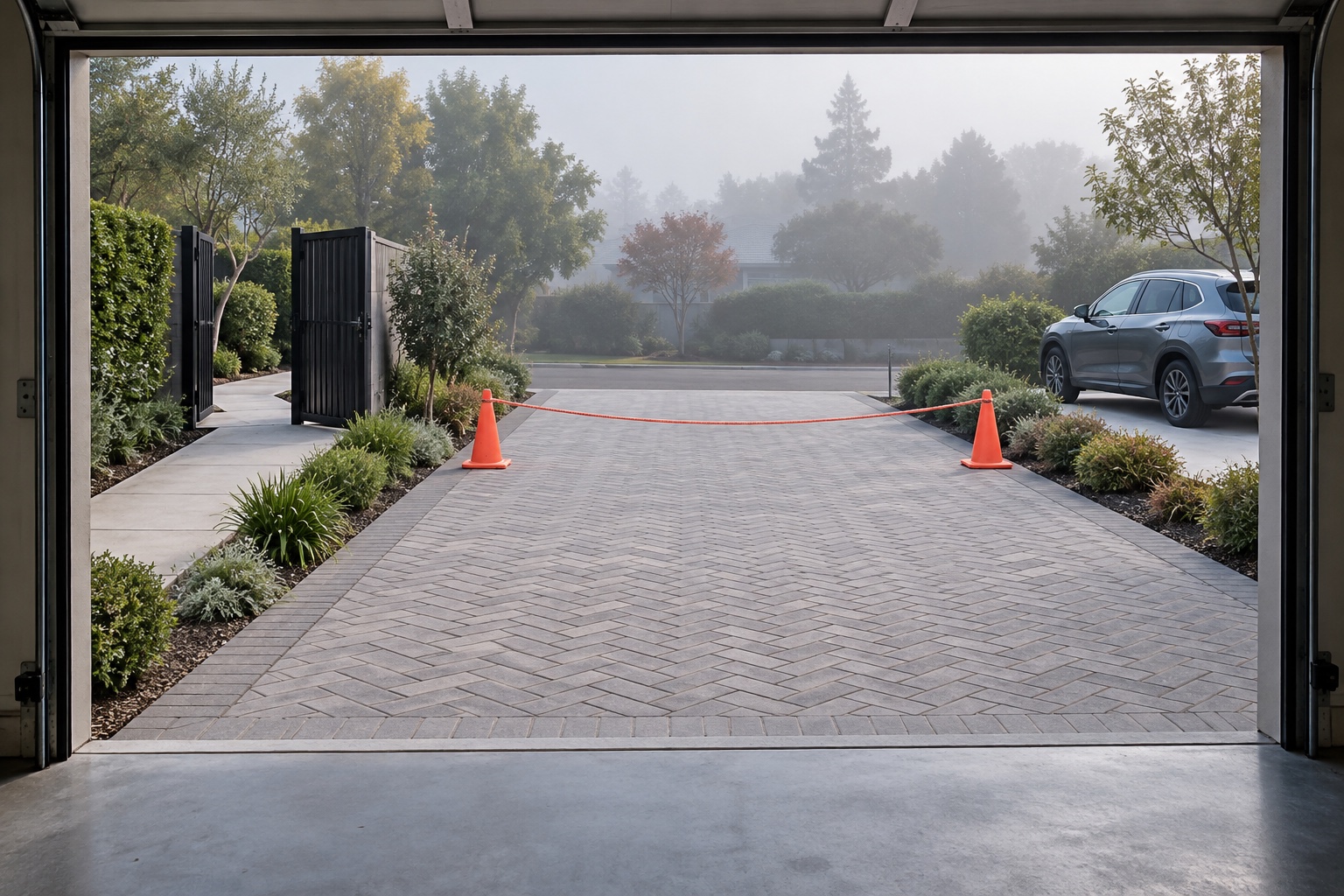
AI illustration: temporary driveway closure, not a real project or certified access plan.
Keep vehicles off your concrete paver driveway until the installer confirms it is ready for vehicle traffic under the selected product’s instructions and actual conditions. Dry to the touch, ready for walking and ready for tires are separate decisions. Arrange parking and a safe route into the house before work starts, then keep those alternatives available if weather delays reopening. Do not decide readiness by touching the coating or taking a trial step.
For paver cleaning and sealing in Palm Beach Gardens, request a site assessment centered on access. Explain who must reach the house and where vehicles can wait, so the proposed work fits your household.
Make access a booking decision
Tell the contractor before booking if the driveway is your only way into the house. Include home-care visits, mobility needs, school pickups and deliveries that cannot easily move. A garage entrance may be convenient every day but unavailable during treatment. Establish an alternative before agreeing to a closure.
Walk the proposed route while everything is still accessible. Check the full journey from alternate parking to a usable door, including gates, steps and any space needed for mobility equipment. An open side gate is useful only if the route beyond it is safely available.
- Parking: obtain permission for alternate parking and confirm you can enter and leave it without crossing the work area. Keep sidewalks and the street unobstructed.
- Household vehicles: include a second car, golf cart or vehicle stored behind the garage. Coordinate each move with the crew before work begins.
- Essential access: identify routes needed for care visits and emergency access. Never let a temporary barrier obstruct a needed route.
- Fallback arrangements: decide what changes if closure continues beyond the expected reopening point, including collection of a vehicle left elsewhere.
If there is no workable alternate entrance, resolve that with the contractor before scheduling. Do not assume the driveway can be treated in sections while leaving a crossing open.
Compare proposed start dates against your household calendar. If a home-care visit requires the usual entrance, move the work or establish a usable alternative with the people involved before committing. That visit should not depend on the most optimistic reopening estimate.
Know what the reopening terms mean
The PRO High-Gloss 1K product technical guidance lists dry-to-touch, foot-traffic and vehicle-traffic stages separately. It also says weather and film thickness can extend traffic waiting periods. This is an example of distinct stages, not a product recommendation or a statement that this product will be used at your home.
Ask for instructions that distinguish walking access from vehicle access; dry-to-touch alone authorizes neither.
Ask the installer to apply the selected product’s guidance to your site. Rain resistance does not establish traffic readiness. Let the contractor assess the coating without touching it yourself.
Match the closure to the written work scope
The cleaning and sealing service overview distinguishes cleaning, joint re-sanding and sealing. Ask which work is included and which areas will be unavailable during each part. Mark the driveway, garage threshold, front walk and any connecting path on a simple sketch so everyone discusses the same boundaries.
CMHA’s Cleaning, Sealing and Joint Sand Stabilization of Interlocking Concrete Pavement advises using treatments intended for concrete pavers and following product instructions. It also explains that joint sand stabilizers do not increase the system’s load-bearing capacity. A reopening decision therefore does not authorize heavier vehicle use than the driveway was built to support.
Record the proposed sealer and any previous coating information in the scope. Settle appearance through the guide to approving a paver sealer finish test before scheduling the full treatment.
If the access review also reveals a walkway or driveway that needs rebuilding, the paver services in Palm Beach Gardens overview helps identify that separate project. Coordinate the work boundaries before combining projects that could remove your alternate entrance.
Redirect the small trips that cross the driveway
The easiest access problem to overlook is an ordinary task. Put the temporary route and delivery point into household plans before the crew arrives, and tell regular visitors what has changed.
- Pets: arrange a route and relief area that avoids the treated surface. Tell anyone walking or collecting them which gate to use.
- Bins: place them where collection and return can happen without rolling them through the closed area, as agreed with the crew.
- Packages and home services: redirect drop-offs to an accessible location. Give carers and scheduled visitors clear arrival instructions.
- Lawn and irrigation service: coordinate visits so equipment, hoses and routine watering do not interfere with the closed work area.
Ask the professional handling the treatment what should happen with irrigation and what to do if rain is forecast. Have them specify any protective measures. Do not improvise with plastic sheets, mats or boards to create a crossing or cover the coating.
Before closure, retrieve anything you will need from storage reached through the garage or driveway. Check that household members have keys for the alternate door. A planned route is of little help if someone comes home to a locked entrance and cannot reach the usual one.
Get a release that names the area and the use
Before the crew leaves, identify who can authorize reopening and how you will receive that decision. A calendar reminder is useful for checking in; it is not permission to remove the barrier. Ask for separate written releases for feet and vehicles if they become eligible at different stages.
Keep the handoff practical:
- Identify the person responsible for confirming reopening and a way to reach them.
- State exactly which area and type of use have been released.
- Record any remaining restrictions and what happens if weather changes before the planned return.
- Confirm who moves the barriers and whether another assessment is needed before vehicles return.
Share the release with everyone using the property. Before moving a vehicle back, coordinate with the crew so its route and parking position match the released area. Keep alternate parking available until that is settled.
Heavy stationary planters and furniture need their own installer guidance. Permission for vehicle traffic does not automatically answer when those objects can return or how they should be moved into place.
Base reopening on your own treatment
Your access arrangements need a decision based on your own treatment and site conditions. Ask for the selected product and its pedestrian and vehicle reopening instructions in writing.
If rain or an early crossing interrupts the plan
If you notice a footprint, tire mark or an unexpected change after rain, document it from an accessible area and contact the installer. Record what happened, where it occurred and when you noticed it. Share photos without stepping onto the closed surface to get a closer view.
Keep others away from the affected area while you obtain instructions. Do not pressure wash, scrub or recoat it yourself. Ask whether the event changes the existing release or requires another assessment, then update household and visitor arrangements accordingly.
For your Palm Beach Gardens paver cleaning and sealing project, request a written access and work-scope discussion. Bring your parking options, essential visits and surface-treatment history. Ask for agreement on closed areas, the reopening contact and the weather contingency before choosing a start date.
For care beyond the initial return to use, our paver sealing maintenance handover guide explains which product details and care instructions to request and keep.