Replacing Pool Deck Pavers: Plan Around the Skimmer Lid
Plan pool deck paver replacement around the skimmer lid: confirm the existing parts, finished level, basket access and who handles each part of the work.
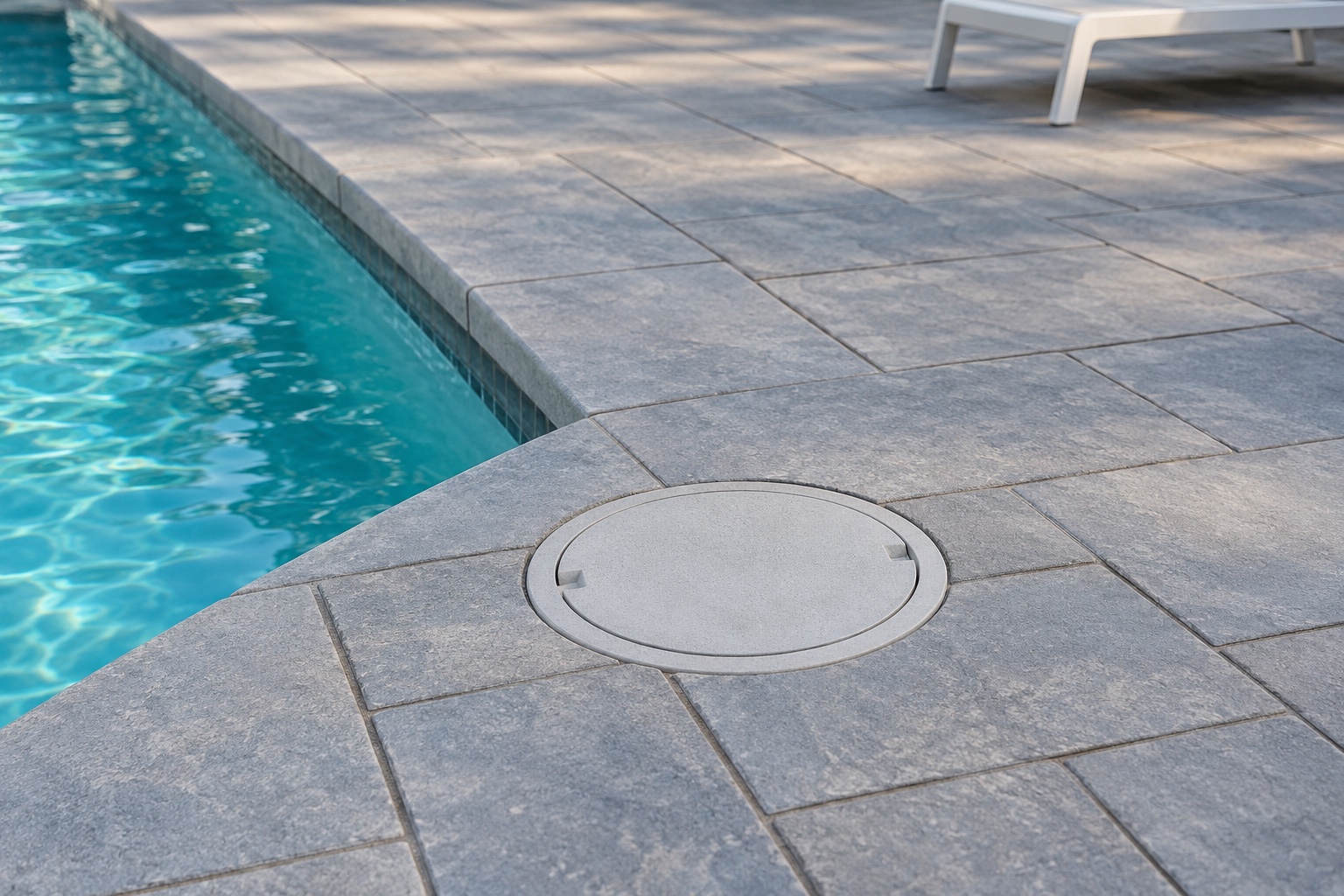
Before replacing pool deck pavers, have a pool professional identify the existing skimmer model and assess its lid and collar. Ask the project team to record their level relative to the intended deck finish before removal begins. Keep the removable lid and basket access clear, and put responsibility for pool components and surrounding pavers in writing. A different deck finish can change that transition, so the solution must suit the existing assembly. There is no universal instruction to add a raising ring.
For homeowners arranging pool deck pavers in Boynton Beach, the skimmer access belongs in the replacement brief alongside the material, coping and layout choices.
AI-generated illustration, not completed work or diagnostic proof.
Identify the access assembly before choosing its appearance
This article concerns the deck-mounted skimmer access lid, its surrounding collar and access to the basket beneath it. A deck drainage trench and an underwater suction cover are different components. Ask your pool professional to identify the parts at your pool if you are unsure which opening or cover you are looking at.
Gather any equipment records you already have. Have the professional confirm the model, assess the component condition and record any identification needed to select compatible replacement parts. A lid that looks similar or shares an outside diameter is not enough to establish compatibility. Choosing by color alone can leave that question unresolved until installation.
As a specific manufacturer example, Pentair’s Bermuda Gunite Skimmer Installation and User’s Guide calls for the lid to remain secured and for worn or damaged lids to be replaced. Its parts list distinguishes the lid, collar and basket. That guidance concerns the documented product; it does not identify your skimmer or establish compatibility with another model.
If the existing cover is loose or damaged, keep people off the unsafe area and arrange assessment by a pool professional. Do not wait for the deck replacement to address it.
Record the transition while the old deck is still visible
Before demolition, ask the deck installer and pool professional to review the proposed finish together. Have them document the existing lid and collar level against the intended surrounding surface, with photographs and a marked sketch. Include nearby coping or a doorway if it affects that part of the deck.
Record what is being retained and what is being replaced. The plan should show how the new pavers will meet the collar while preserving access. Do not tile or bond material over a removable lid to continue the pattern. Ask to see the proposed layout around it before accepting the visual treatment.
A new material or construction approach may change the transition even when the pool equipment stays. Have the professionals confirm whether the existing arrangement can accommodate the proposed finish. Any component alteration needs its own assessment and scope. For the broader choice of construction approach, our pool deck lift-or-overlay comparison explains the separate questions to resolve before specifying the finish.
Put a name beside each part of the work
The proposal should distinguish pool component work from the installation of adjacent pavers. Ask who will assess the assembly and specify any replacement components; who will lay the surrounding units; and who will check the transition when both trades have finished. Identify who coordinates their visits and communicates changes to you.
Do not assume a deck contractor also performs pool equipment work. Keep plumbing, underwater suction components and structural concrete within the appropriate professional scope. A line saying that the deck crew will work around the skimmer should explain what protection and coordination it includes.
Ask how the area will be kept inaccessible when work interrupts normal access. Agree who protects the retained components during removal, who checks their condition before adjacent work proceeds, and who confirms that ordinary basket servicing remains possible afterward. This gives each contractor a clear stopping point if the work depends on another trade.
To start a deck consultation, make an inquiry through our pool deck services page. Have photographs of the pool surround and closed lid, your intended finish and any pool professional’s findings ready. The next step is to discuss the deck scope and identify what needs assessment before a proposal can be finalized.
Separate known work from discoveries after removal
A visibly damaged lid, a planned material change or a confirmed component replacement belongs in the foreseeable work. Have the proposal identify it before removal starts. Conditions concealed beneath the existing surface may remain uncertain, but that uncertainty should have a process attached to it.
Agree who records a discovery, which professional assesses it and who submits the proposed change for your approval. Ask which nearby work must pause and how the area will be protected while a decision is pending. Keeping this process written helps you compare proposals without treating every unknown as included or excluded by default.
Use our pool deck paver replacement estimate guide for the wider removal and preparation scope. For the skimmer area, add the specific retained parts, proposed component work and coordination responsibilities so they remain visible within that larger estimate.
What a documented written scope can show
A documented 2025 Boynton Beach written scope separated a porcelain pool deck, matching coping, removal of old pavers and moving reusable pavers to a walkway area. It does not document skimmer replacement or establish completed field quality. For a homeowner comparing proposals, the useful lesson is the separation of tasks. Adding skimmer work requires its own line item, responsible trade and agreed boundaries, rather than an assumption about the deck.
Record surface observations without diagnosing the skimmer
Before work, photograph any low areas, raised units or places where water remains around the access assembly. Note what you observed and when, from a safe position. Keep those observations with the scope so the professionals can distinguish an existing concern from something first noticed during construction.
For concrete pavers, CMHA’s Operation and Maintenance Guide for Interlocking Concrete Pavement discusses inspecting distress such as settlement, ponding and raised units, then identifying the cause and appropriate repair scope. It is guidance for interlocking concrete surfaces, not a universal repair recipe for porcelain or natural stone. Use it to frame the surface discussion with your installer.
Water near a lid does not, by appearance alone, establish which component needs attention. Ask the deck installer to address the surrounding surface and the pool professional to assess concerns involving pool components. Have their conclusions recorded together when the proposed work depends on both. A photograph can locate the concern without deciding the repair.
Walk through access and responsibility at handover
Ask the responsible professionals to review the finished skimmer area with you. Keep the answers with the product information and final scope:
- Has the pool professional confirmed the correct lid is fitted and secured for the identified assembly?
- Can the professional demonstrate clear lid and basket access, without disturbing surrounding pavers?
- Has the deck installer checked that the adjacent units are stable and the agreed transition is complete?
- What water behavior was observed, and does anything still require assessment?
- Which trade handles each unresolved item, and who coordinates follow-up?
If conditions have not allowed a useful water observation, record that limitation and agree how it will be reviewed. Keep any unresolved component concern open with the pool professional. The handover should leave you knowing how routine access works and whom to contact about each part of the installation.
Request a consultation for Boynton Beach pool deck replacement with your photographs, intended material and list of retained components. The next conversation can define the deck work, clarify what your pool professional needs to confirm and identify the information needed for a written proposal. That gives the skimmer access a place in the plan before the new pavers are ordered.