Replacing Pool Deck Pavers Around a Screen Enclosure
Plan pool deck paver replacement around a screen enclosure: define retained features, door and service access, hidden conditions and contractor responsibilities.
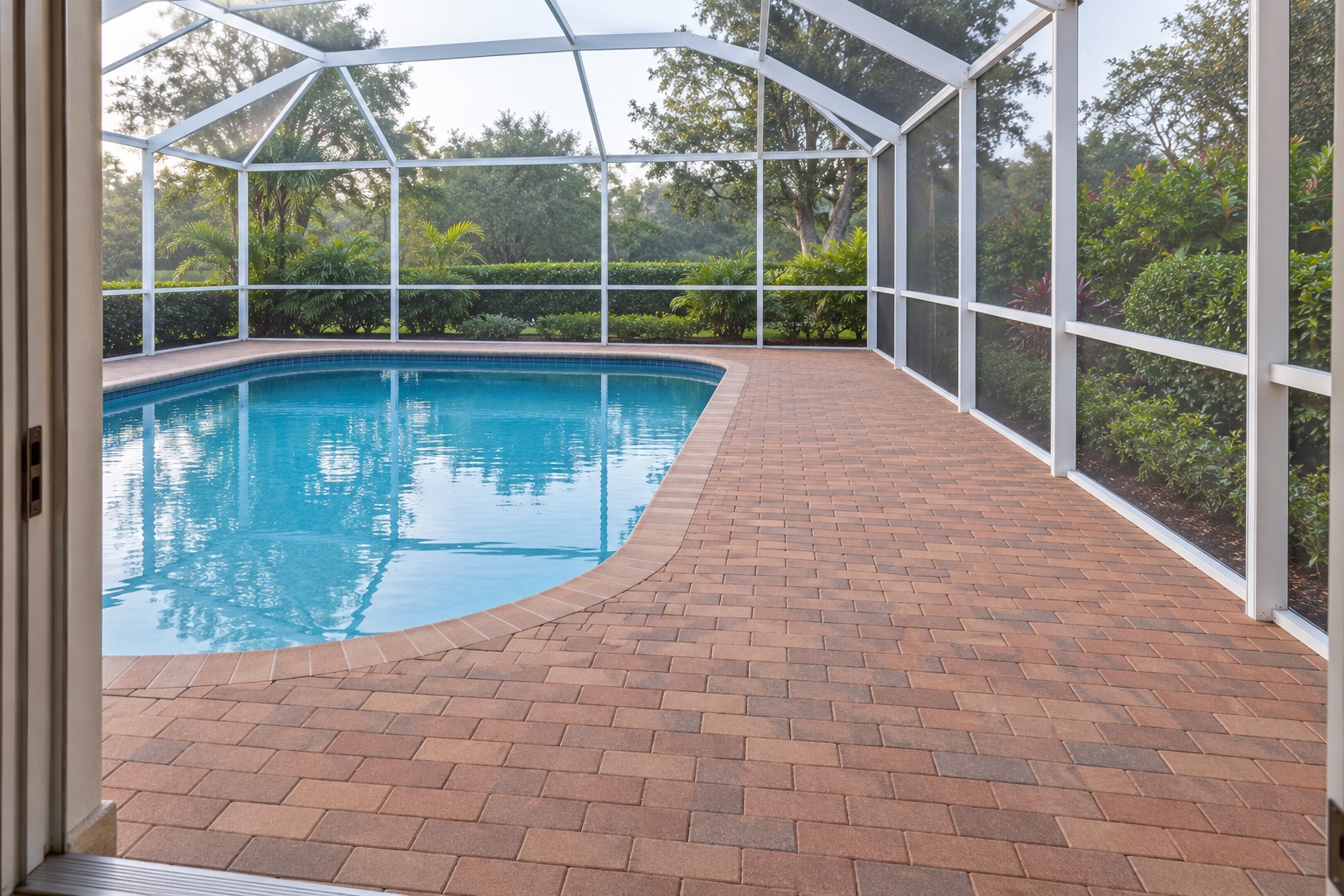
Before replacing pool deck pavers around a screen enclosure, establish what stays, where the new surface will meet it, and how workers and materials will reach the deck. Have the paver contractor assess the surface work and a qualified enclosure professional assess questions involving the enclosure structure or its connections. Do not disturb those connections for paver work. Pricing should separate the agreed deck scope from unresolved enclosure conditions, access arrangements and discoveries beneath the existing surface. A finish selection alone cannot settle those questions.
Our pool deck pavers service in Boynton Beach provides a starting point for that assessment. The planning questions below also help Palm Beach County homeowners organize a replacement around retained features.
AI-generated illustration of an imagined screened pool enclosure and deck. It does not show completed work or an installation detail.
Define the boundary of the replacement
Walk the perimeter before comparing colors. Identify the visible enclosure base, bottom rail or track, posts, doorway and neighboring surfaces. Describe what you can see without assuming what supports it below. The enclosure base and the base beneath the pavers are separate subjects; using the same word for both can leave a proposal unclear.
Decide whether the project includes only the main deck or also a strip outside the screen, a connecting path, or the surface beside the house door. Mark those boundaries on a simple photo or sketch. An attractive new interior can still feel unfinished if nobody discussed the adjoining worn surface.
Have the proposal identify retained enclosure components and name the person responsible for evaluating any enclosure concern. A paver replacement contract does not establish that enclosure work is included. Questions about structural connections belong with a qualified enclosure professional. If a proposed approach depends on changing the enclosure, settle that separate scope before accepting the deck price.
Describe how the enclosure works today
Tell the assessment team about a door that catches, visible damage to a rail, a torn screen, or a post that looks different from its neighbors. These are observations to investigate, not diagnoses. Photograph the enclosure condition and note whether a door problem is longstanding or something you have just noticed. Avoid assigning a cause from the appearance of adjacent pavers.
Ask who will review existing enclosure damage and how that finding will reach the paver contractor. Otherwise, each proposal may quietly assume that someone else has already checked it. Give both parties the same description of what you want to retain.
Discuss the house doorway and enclosure door together with the intended deck finish. Ask how their relationship to the proposed surface will be assessed, and who resolves a conflict before materials are ordered. Do not assume that choosing a similar-looking replacement leaves every transition unchanged.
Ask what is known beneath the surface
Request a clear distinction between visible observations and assumptions about the substrate. An existing surface may conceal conditions that cannot be confirmed during an initial walkthrough. Ask what records would help, what remains unknown and when the contractor expects to resolve it. A confident price should still explain its assumptions.
CMHA’s Construction of Interlocking Concrete Pavements treats the base, bedding, edge restraints and finished elevations as coordinated elements for concrete pavers; bedding sand should not compensate for an uneven base. This is a general planning analogy, not a porcelain installation method or a detail for screen structures, gates or anchors.
For your replacement, ask the contractor to explain the proposed material system and its relationship to retained features. A reference to a concrete guide cannot answer every question about a different material. Any unresolved enclosure interface should have a named reviewer, rather than an assumption buried in a material description.
Plan access before accepting the schedule
The route to the deck deserves its own conversation. Show the contractor the entire journey from the unloading area to the work area, including turns, doors and surfaces that will remain. Ask the team to assess the route without treating the screen enclosure as something that can simply be altered for convenience.
Useful questions for the proposal include:
- Where will incoming materials and removed pavers wait?
- Who protects the surfaces along the carrying route?
- How will household entry and pool service be coordinated?
- Who confirms when each area is available for normal use?
Tell the team about recurring service visits and household routines that use that route. Ask who communicates temporary changes and whom to contact if the planned route becomes unavailable. These decisions can affect handling, sequencing and the quoted scope even when the deck area itself stays the same.
Request a consultation through our pool deck pavers service. Share photographs, your keep-or-replace priorities and the access route so the assessment can address the deck boundaries, material options and unresolved interfaces. Ask which questions need a separate enclosure professional before the paver proposal is finalized.
Make discoveries a separate budget discussion
Ask the estimate to distinguish included work from a separate allowance for discoveries after removal. An allowance needs a stated purpose and a process for approval. It should not read as permission to complete any additional work without discussing it with you.
Agree on the information you will receive if something unexpected appears: photographs, an explanation of the concern, the responsible professional and the proposed change in scope. Ask what happens to the affected area while a decision is pending. Where the concern involves enclosure connections, the paver crew should leave those connections undisturbed and involve the qualified enclosure professional.
For comparing the broader proposal, our pool deck paver replacement estimate guide helps organize removal, preparation and retained features. Use the same project description when requesting prices. Otherwise, a lower total may reflect omitted access arrangements or an unresolved responsibility rather than a comparable offer.
What the Boynton written scope demonstrates
The written scope described on our Boynton Beach service page includes a porcelain pool deck and porcelain coping, removal of existing pavers, and reuse of salvaged pavers in a separate front walkway. Those are distinct work areas and material decisions worth spelling out in a proposal.
That written scope demonstrates boundaries. It does not establish screen work, the condition of an enclosure or completed installation quality. For your project, specify where removed material is intended to go and who handles that destination. A decision to retain the screen enclosure needs its own assessment; the porcelain scope supplies no answer about it.
Close with service access and a joint walkthrough
Keep pool equipment access on the discussion list. Show where the service provider walks and which areas must remain reachable after replacement. Our guide to pool deck pavers around a skimmer lid addresses that separate interface. An orderly enclosure perimeter should not distract from the parts of the pool that still need servicing.
For concrete pavers, CMHA’s Operation and Maintenance Guide for Interlocking Concrete Pavement supports recording condition, distinguishing aesthetic from structural distress, retaining undamaged units for reinstatement and planning maintenance. Its scope is the concrete surface system, not enclosure connections. Ask for the concrete paver condition record and intended storage of retained units to be included in the handover.
Plan a final joint walkthrough with the paver contractor and, where enclosure questions arose, the enclosure professional. Ask each to address their own scope. Review the agreed boundaries, door use, service route and any outstanding items, with a named contact for follow-up. This makes the handoff understandable without asking one trade to certify another’s work.
For your project, request a consultation through our Boynton Beach pool deck pavers team. We can review your replacement priorities, visible deck conditions and access needs, then identify what belongs in the paver proposal and which enclosure questions need separate professional assessment before you commit.