Cleaning Stone Beside Concrete Pavers: Plan Each Surface
Plan cleaning where concrete pavers meet stone borders, steps or coping. Identify materials, protect transitions and agree on a separate scope for each surface.
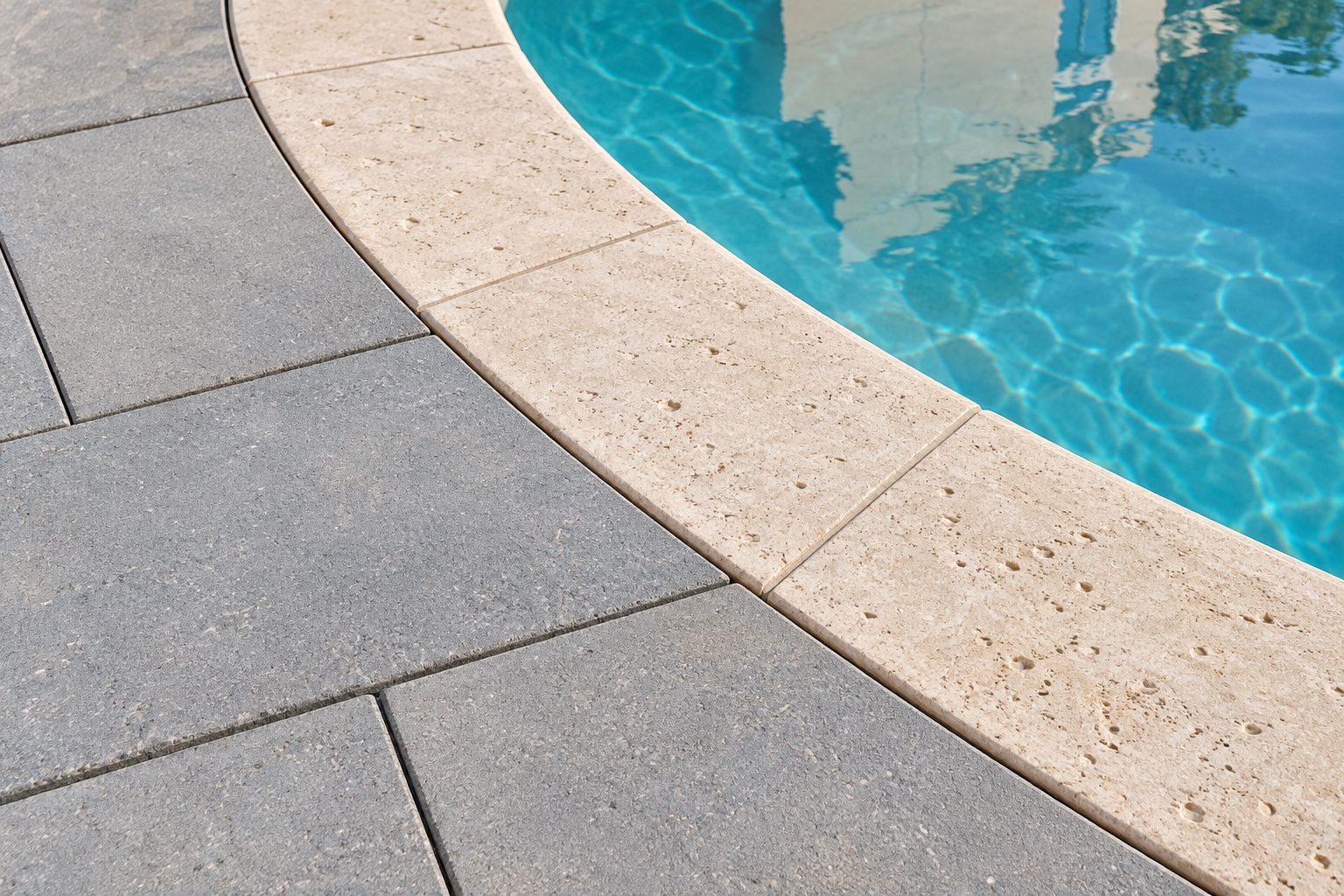
AI illustration: adjacent stone and concrete, not a completed company project.
Concrete pavers beside stone borders, steps or pool coping should be assessed as separate surfaces within one cleaning job. Identify each material, finish and previous coating before approving treatment. Then request a plan that marks the boundaries, protects adjacent surfaces and states what each zone should achieve. If identification or damage is unresolved, leave that zone out of treatment until the right professional can assess it. The priority is preserving each surface while improving the shared outdoor space.
A consultation for paver cleaning and sealing in Palm Beach Gardens can begin with that whole-site inventory, even when only the concrete pavers are ready for a proposal.
Start with records, then confirm the surfaces
Gather installation invoices, supplier names, spare-material labels and records of recent cleaning or coatings. Include photographs showing the whole patio and close views of borders, step treads, risers and coping. Record which products were used where. An old container is useful evidence only if someone can connect it to the work actually performed.
Ask the professional to distinguish confirmed information from assumptions. Appearance and trade names alone may be inconclusive, especially when replacement pieces or old coatings obscure the original surface. List unknown material, finish or coating details before authorizing treatment; do not try household acid spot tests to fill those gaps.
The Natural Stone Institute’s Care & Cleaning of Natural Stone makes composition central to care. Calcareous stone is acid-sensitive, and acidic products can etch or dull it. A cleaner intended only for concrete therefore needs a plan that prevents contact with adjacent sensitive stone.
Our travertine and porcelain pavers comparison provides background if those names appear in your records; it cannot identify an installed surface from its appearance.
Map the transitions before discussing equipment
A marked photograph or simple sketch should show where each proposed treatment starts and stops. Include narrow strips that are easy to overlook during a walkthrough. A stone step connecting two concrete areas deserves its own entry even if it occupies little space.
For each zone, record:
- Identity: confirmed material and finish, with unresolved details clearly marked.
- Condition: visible staining, coating history and areas needing closer inspection.
- Boundary: the adjoining surface and the proposed treatment limit.
- Status: included, excluded pending assessment, or awaiting repair before cleaning.
Ask for written responsibilities for protecting adjacent finishes, planting and the pool. The contractor should explain how cleaning liquids and runoff will be handled, including at transitions and low areas. A line drawn on a photograph does not itself contain anything; the proposal needs a practical protection method and someone accountable for it.
Walk the route between work areas as well. Establish who checks protection before work begins and who can stop the job if liquid crosses a boundary or an unidentified surface is uncovered. These decisions belong in the scope, not in a hurried conversation after equipment arrives.
Compare proposals using the same marked plan. A lower total is difficult to evaluate if one contractor excludes the coping and another includes its protection and assessment. Ask for those differences to be explicit, including who coordinates a separate specialist and how you approve any change in scope.
Use professional tests to decide the scope
CMHA’s Cleaning, Sealing and Joint Sand Stabilization of Interlocking Concrete Pavement addresses concrete pavers. It calls for identifying stains, evaluating treatment in a small inconspicuous area and following product instructions. It also recommends an experienced professional company for most cleaning jobs. Those recommendations do not establish a cleaning method for limestone or travertine.
Have the professional select and assess tests appropriate to each material and condition. Record the location and proposed treatment so an acceptable result on one zone is not silently extended to another. Ask what the test establishes, what remains uncertain and whether the proposed work changes after inspection.
The cleaning method and pressure should be selected by the professional for the actual substrate, finish, joints and condition. A single advertised pressure setting is not a specification for the whole property. Your approval should identify the surfaces covered by the proposed method and the areas still on hold.
Separate cleaning from repair and restoration
During the walkthrough, ask the contractor to distinguish removable dirt or staining from etching, worn finish and physical damage. Cleaning and sealing may not reverse those conditions. Photograph existing defects together so the completion review has a shared starting point.
Identify gaps in expertise before the job starts. Loose concrete pavers, damaged stone edges and an altered stone finish may require different repair or restoration skills. Ask who will assess each concern, whether that person is included in the proposal, and which cleaning areas depend on that decision.
Our natural-stone installation services are relevant when the discussion turns to replacement. We offer an assessment to define the work; specialist stone restoration needs separately confirmed expertise. A proposal should clearly state if that work remains outside its scope.
Request an assessment through our paver cleaning and sealing service. Bring the material records and marked photos so the consultation can separate cleaning, unresolved stone conditions and any repair questions before a documented proposal is prepared.
Decide on sealing separately for each material
The same Natural Stone Institute guidance explains that many stones do not need sealing. Stone repellents can improve stain resistance without making the surface stain-proof. The stone supplier and the selected product’s requirements should guide that decision.
Ask the proposal to state whether each zone will be cleaned only, considered for sealing after assessment, or left untreated. Do not assume that stone should receive an acrylic concrete coating because the adjoining pavers are being sealed. Require the exact proposed product and confirmation that it suits the identified material, existing finish and intended location.
This makes the estimate easier to judge. An omitted stone treatment can be a deliberate decision supported by the assessment, rather than an incomplete job. Conversely, a single line for sealing the entire patio leaves the material choices unexplained.
Identify the concrete and stone tasks separately
Ask which concrete-paver tasks your proposal includes, such as cleaning, joint work or sealing. Those tasks do not establish the treatment or likely result for an adjoining stone border, steps or coping; identify their assessment and scope separately.
Agree on the result and keep the record
Before approval, describe success zone by zone. Identify the marks expected to improve, finish differences that may remain, and defects excluded from cleaning. Avoid accepting a broad promise to make everything look new. Different materials can remain visibly different after appropriate maintenance, and cleaning or sealing offers no slip-proof or stain-proof guarantee.
At completion, compare the work with the mapped scope and agreed test records. Keep the product names, treated locations, photographs and written aftercare together. Ask for care instructions for each surface, including what a future maintenance provider should know about the finish and any remaining restrictions. That record gives the next service visit a better starting point than a recollection that the whole patio was sealed.
For cleaning and sealing assessment in Palm Beach Gardens, request a walkthrough and documented proposal organized by surface. Share the unresolved areas in advance and ask for treatment limits, protection responsibilities and expected results for each zone before authorizing work.
For surfaces outside the cleaning scope, our guide to protecting plants, glass and stone before paver cleaning helps you prepare a separate protection and access checklist.