Cleaning Pavers Around an Outdoor Kitchen: Define the Work Area
Define the paver cleaning area around an outdoor kitchen: materials, fixed cabinets, protection, grease-test limits and separate surface and appliance reopening.
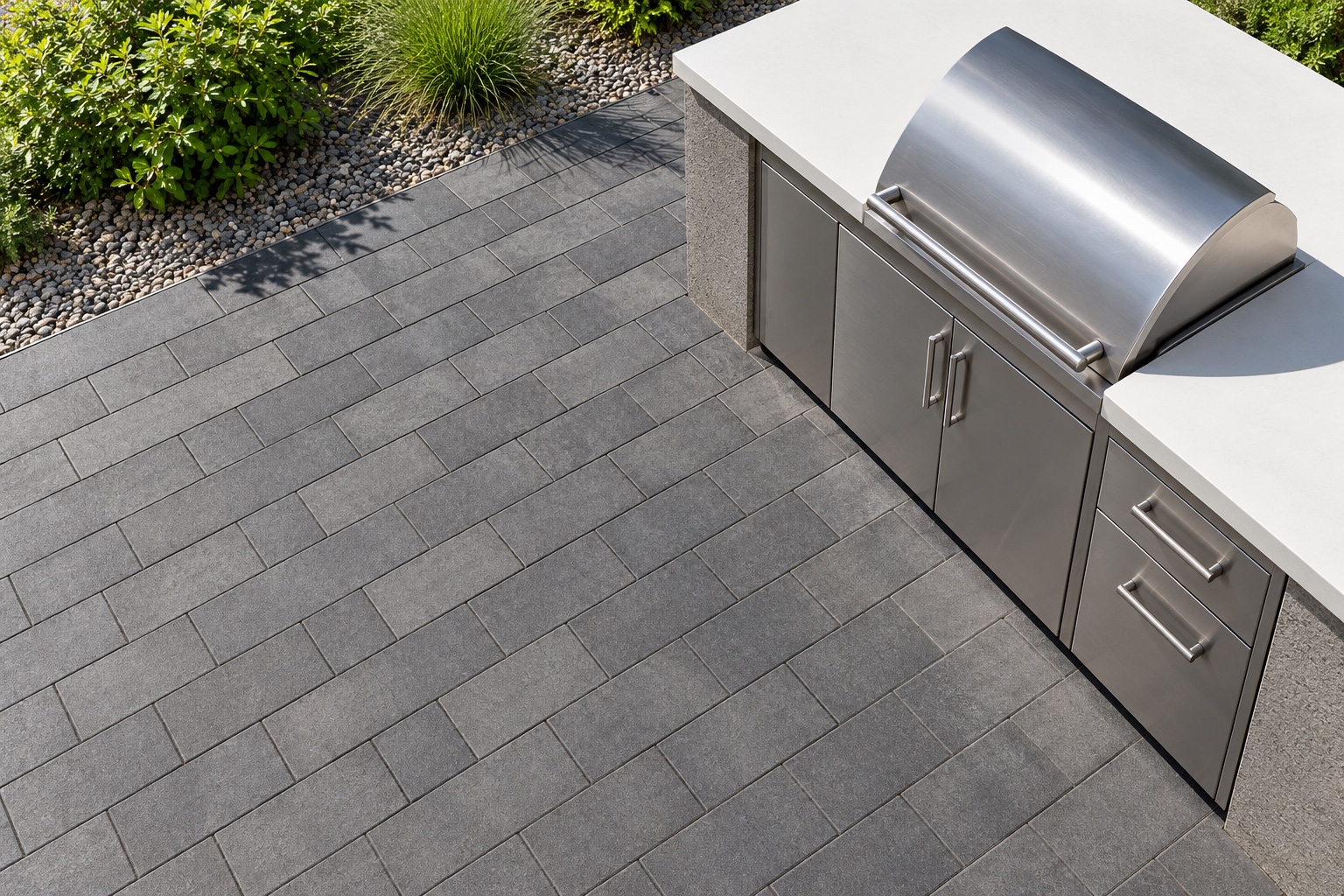
AI illustration of an outdoor kitchen beside charcoal concrete pavers, not a completed project or an installation detail.
Before cleaning interlocking concrete pavers around an outdoor kitchen, define the reachable surface, identify adjoining materials and agree who handles equipment access. Separate the open patio from areas beneath fixed cabinets. Ask how grease-affected zones will be tested and how treatment limits will be recorded. Keep cleaning, repairs and optional sealing separate. Any appliance disconnection, movement or reconnection belongs with the responsible equipment professional. Confirm surface reopening separately from approval to use the appliances.
Our paver cleaning and sealing service in Boynton Beach starts with assessing the proposed work. For an outdoor cooking area, the measured boundary matters as much as the patio’s overall size: an estimate should say where treatment can actually reach.
Inventory the pavers and the kitchen beside them
Prepare a simple description of the area before the visit. Identify the concrete pavers, any different border material and whatever you know about previous coatings. Gather installation paperwork, product records and earlier maintenance invoices. Mark missing information as unknown so the contractor can decide what needs further assessment.
List the adjacent cabinet finish, countertop and exposed metal separately. A white countertop is a color description, not a material identification. Share the kitchen manufacturer’s care information if available, and point out any finishes whose identity remains uncertain. These items belong in the protection discussion even when they are outside the cleaning contract.
Use an overview photograph to locate each surface and closer images to show concerns. Include the cabinet base, narrow side passages and the route into the backyard. Photos help prepare the visit; they do not establish hidden conditions or replace measurements. Have the contractor confirm the inventory on site before it becomes the basis of the proposal.
Draw the boundary at fixed cabinets
Ask the contractor to distinguish open pavers, restricted edges and inaccessible areas beneath the kitchen. A strip visible under a cabinet overhang may still have limited working access. The proposal should identify the actual treatment boundary, rather than describing everything around the grill as one continuous cleaning area.
If cabinets stay in place, record what remains uninspected and untreated beneath them. Do not accept language suggesting that the entire kitchen footprint has been cleaned when only the exposed patio is included. The contractor should explain how that boundary will be shown in the work record and reviewed afterward.
Have the measured quantity refer to the approved reachable area. If equipment access later exposes more pavers, ask for the added area and any additional visit to be documented before you approve the change. This keeps an access decision from silently expanding the job.
If access would require moving equipment, establish a separate arrangement with the responsible equipment professional. That professional handles the necessary disconnection, movement, reconnection and equipment checks. Homeowners should not disconnect gas, electrical or plumbing connections to prepare for paver work. Nor should a cleaning estimate silently assume that someone else will move an appliance.
Name who coordinates the visits and who confirms that the agreed area is available. If equipment access cannot be arranged, revise the cleaning boundary before scheduling.
Agree on protection and the grease-area review
CMHA’s Cleaning, Sealing and Joint Sand Stabilization of Interlocking Concrete Pavement recommends small cleaning trials, following product directions and warnings, and protecting nearby vegetation. Kitchen finishes need their own assessment.
Have the contractor explain the protection proposed for cabinet faces, the countertop, exposed metal and nearby planting. Ask where access or protection remains unresolved and what must be settled before work proceeds. The written boundary should distinguish surfaces being treated from surfaces being protected. Including a cabinet in that inventory does not include cleaning its interior, the grill or other appliances.
For grease-affected zones, ask where the contractor proposes to test and which decision the test will inform. Discuss how the result and any remaining discoloration will be recorded. Agree who reviews it with you before broader treatment is authorized. Do not turn a promising result on an open section into a promise for a restricted edge or an unseen area beneath cabinetry.
Define what happens if the result is unacceptable: further discussion, a revised proposal or leaving that area outside the approved work. Avoid an open-ended commitment to keep treating until every mark disappears. No cleaning proposal should guarantee complete stain removal.
Request a measured site-assessment consultation through our paver cleaning and sealing service. Send overview photos, available material records and a note about fixed equipment. Ask for an on-site review that maps reachable areas, identifies protection and access questions, and produces an itemized proposed scope before you authorize cleaning.
Keep repairs and sealing as separate decisions
CMHA’s Operation and Maintenance Guide for Interlocking Concrete Pavement distinguishes appearance problems from distress affecting structural performance. Have movement, damaged units or settlement assessed independently of surface cleaning, with any proposed repair recorded separately.
Compare the proposal by work category. Cleaning should identify its area and agreed treatment limits. Repairs should identify their locations and approval status. Any joint work needs its own description. Optional sealing needs a separate recommendation and decision; it should not appear as an automatic addition because the kitchen is used for cooking.
If observations after rain are prompting the sealing request, our guide to water beading and paver resealing explains the questions to take into an assessment. Keep that discussion tied to the identified surface and its history. The outdoor kitchen’s presence does not select a product or establish a maintenance schedule.
A cleaning contract also does not provide food-safety or fire-safety approval. Appliance servicing and any leak testing are outside this paver scope. Keep those responsibilities with the appropriate equipment professional and their separate agreement.
What a written scope can clarify
One written scope in our Boynton Beach records lists a front walkway using pavers salvaged from the pool deck, with base preparation, a laying pattern and a border. Its relevance here is the identification of a specific work area and its included tasks in the paperwork. It is an installation scope, not an outdoor-kitchen cleaning case or evidence of a cleaning result.
Use that same clarity when reviewing your proposal. A reference to the patio should not leave you guessing whether the cabinet-side strip is included. Each included area needs a description that you and the contractor can locate together, with exclusions attached to the same plan.
Plan surface access and appliance use separately
Ask the paver contractor to confirm when each treated area can return to its intended use under the actual work and product instructions. If sealing is selected, obtain its applicable restrictions with the handover information. Keep an equipment professional’s return visit conditional on confirmed access to the surface, rather than scheduling it from an assumed universal drying time.
Our guide to using a driveway after paver sealing discusses planning access around a confirmed return to service. For an outdoor kitchen, apply the planning principle to the route and work area; driveway traffic guidance is not permission to operate a grill.
The paver contractor’s surface release and the equipment professional’s approval address different responsibilities. Confirm both where equipment work is involved. Tell each provider if the schedule changes, and keep the household’s cooking plans flexible until the relevant use has been confirmed.
Review the boundaries before approving work
Read the estimate against the marked photograph or sketch. Check the measured area, fixed-cabinet exclusions, protection responsibilities, grease-test review, separate work items and return-to-use arrangements. Ask who documents unexpected findings and obtains approval for changes. A clear description lets you compare proposals without assuming that the same patio label means the same work.
Request a measured site-assessment consultation for paver cleaning and sealing in Boynton Beach. Share your kitchen layout, surface records and access concerns. The next step is an on-site review of the reachable pavers and adjacent finishes, followed by a written scope identifying included work, exclusions and coordination needed before scheduling.