Jupiter Paver Patios: Plan for the Termite Certificate
Plan a Jupiter paver patio with the termite certificate in mind: coordinate house-edge work, provider access, written responsibilities and completion records.
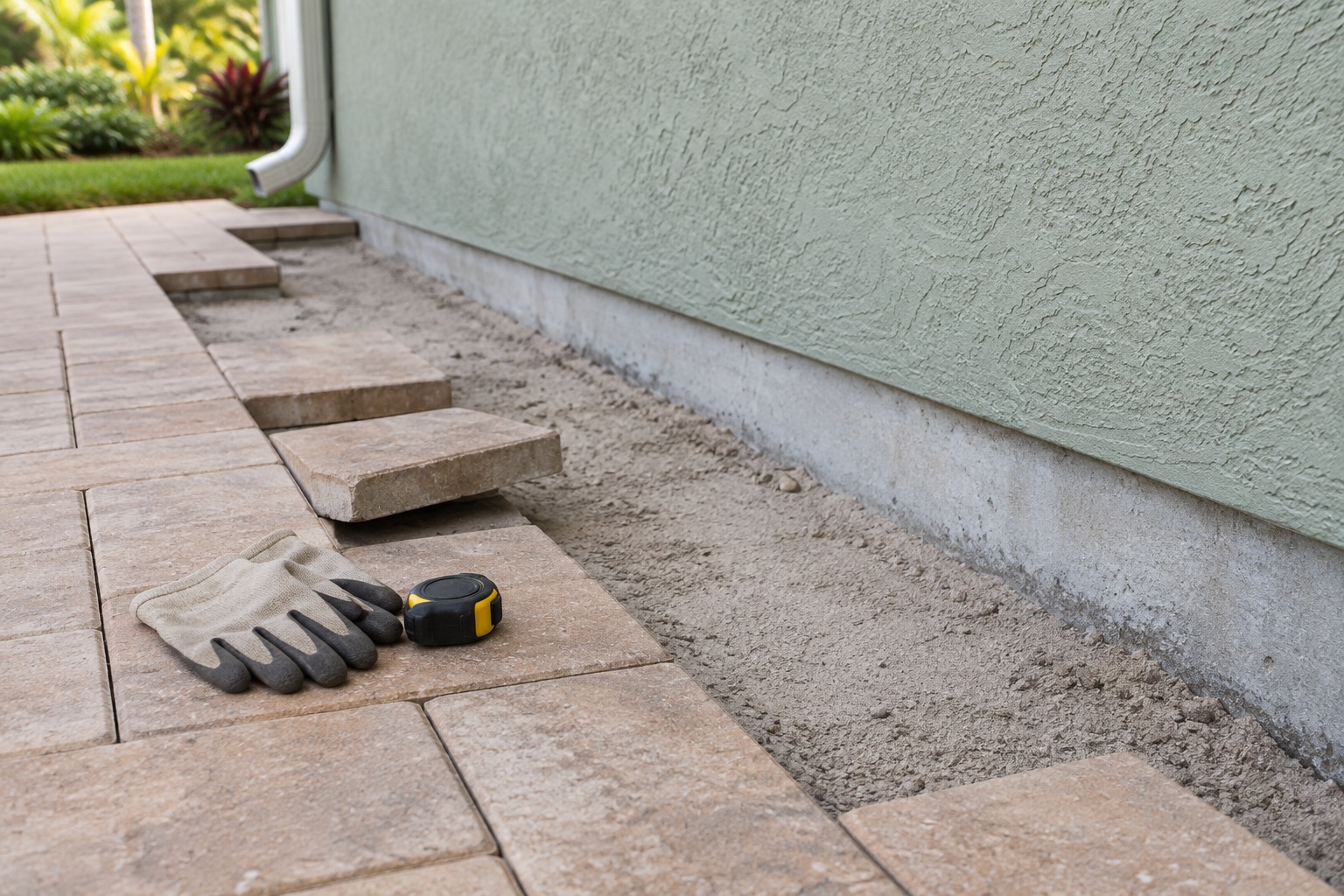
Plan for the termite certificate before excavation begins on a paver patio in the Town of Jupiter. The town’s Concrete Patios, Decks, Slabs, Pavers checklist, revised August 2024, lists a termite protection compliance certificate at completion, alongside compliance with approved plans and applicable codes. The checklist covers several kinds of work. It does not mean every freestanding patch of pavers needs chemical treatment. The town and a licensed pest-control provider should determine what applies to your scope and existing protection system.
When planning paver patio installation in Jupiter, work out who needs access beside the house, who supplies the paperwork, and when the crew can finish the surface.
Hero image: generated planning illustration beside a house, not a completed company project or a guide to treatment procedures or required dimensions.
Give both contractors the same picture
The same town checklist calls for a survey with setbacks, a drainage plan, and a dimensioned layout showing the work’s relationship to existing structures. Those drawings also give your patio contractor and pest-control provider a common reference before excavation.
Mark the proposed patio outline and the section beside the house. Include areas where existing pavers will be lifted, ground will be disturbed, or a drain will be installed. Show the gate used for access and any work planned along that route. A provider reviewing only the finished patio outline could miss digging associated with a drain connection or irrigation adjustment.
Send the same dated drawing to both companies. Add photographs of the house edge, downspouts, door thresholds, and any visible termite-system components. Leave identification and handling of those components to the provider. Photos help explain the job, but they should not replace a visit when the provider needs to examine the site.
If the patio connects to a swimming area, our guide to pool deck expansion and drainage planning in Jupiter covers the separate question of where runoff will go. Include that adjoining work in the overall drawing so each contractor sees the full area affected.
Identify the existing protection method
The 2023 Florida Building Code Residential, Section R318: Protection Against Termites, reproduced in this government-hosted excerpt, recognizes soil treatment, bait systems, wood treatment, and other approved methods. Under R318.1.2, if soil treatment is used, soil disturbed after the initial chemical treatment must be retreated. Registered bait systems are excluded from R318.1.1 through R318.1.6. The method therefore matters; there is no universal instruction to spray every patio. After treatment, R318.1 calls for the licensed pest-control company to issue the compliance certificate to the building department. These provisions come from the statewide code.
Keep your existing service contract, treatment record, and provider contact information together. Send copies before the site visit, including records inherited when you bought the house. If the history is incomplete, say so. The provider can explain what it needs to establish the existing system, how the proposed work affects its service, and which warranty terms apply. Those answers belong with the provider’s written scope.
Decide who does what
A proposal should make it easy to see where one company’s work ends and the next person’s responsibility begins. A general line for permits or site preparation does not tell you who will arrange the provider’s visit or keep access open.
Use this checklist when reviewing the written proposal and the provider’s scope together:
| Responsibility | Who to identify | What to put in writing |
|---|---|---|
| Patio construction | Paver contractor | Removal and excavation limits, access arrangements, and who coordinates the next construction step. |
| Termite protection | Licensed pest-control provider | Existing method, any required work, treatment records, and the applicable certificate. |
| Owner decisions | Homeowner | Existing contract and treatment history, access to the property, and approval of scope changes. |
| Permit completion | Named permit contact and town | Who submits documents, follows up on outstanding items, and obtains town completion confirmation. |
Check whether the patio price includes any provider charges or whether you will contract with that company separately. If a cost is still unknown, the proposal should say so and explain how you will approve it before work proceeds. Compare proposals using the same excavation limits and division of responsibilities. A lower total may leave out a visit, restoration work, or coordination that another proposal includes.
For a consultation about patio design and installation, bring your survey, treatment records, and planned outline to Pavers of Palm Beach. The visit can cover measurements, access, and the work you want included, leading to a written proposal. Discuss which tasks belong to your licensed provider so both companies can plan their part of the job.
Keep the house edge accessible
Agree on when the provider needs to see or reach the affected area during construction. Keep that access available until the planned visit and any provider-directed work are complete. The crew should know who will tell it when to proceed with the next step. Avoid setting a finish date that assumes the provider can arrive without a scheduled visit.
Discuss practical access as well as timing. Stored pavers, outdoor furniture, and a locked side gate can obstruct the area someone needs to reach. Choose a contact who can open the gate and answer questions while work is underway. A short written update after the visit helps the contractor understand what is finished and what remains open.
If an unplanned irrigation trench is proposed after the provider’s visit, pause that new digging for coordination. Send the changed location to the patio contractor and provider before proceeding. Let the provider decide what follow-up is needed and explain how the change affects your service agreement. Record the revised plan so the next crew does not work from an outdated drawing.
For a broader renovation involving paths, walls, or other outdoor work, the overview of paver services available in Jupiter can help define which parts to discuss together. Share planned later phases too, especially if they may reopen the same house edge.
On your patio drawing, mark where similar features meet and decide who will handle each connection. Your own provider will need the details of your property and proposed excavation.
Keep a completion folder
Before treating the project as finished, collect the final scope, approved changes, provider paperwork, and the town’s completion confirmation in one folder. Check the property address and any permit references, and make sure the documents describe the work actually performed. Resolve a wrong address or missing attachment with the company that issued it.
Keep the provider’s certificate and town completion confirmation as separate records. A paid invoice documents a transaction; it does not answer whether the required completion documents have been submitted and accepted. Have the person handling the permit identify anything still outstanding. Save the contractor’s and provider’s contact details with the records for future work beside the house.
To plan your Jupiter paver patio project, contact Pavers of Palm Beach for a consultation and site measurements. Bring the proposed layout and existing termite-service records. Use the visit to develop a written proposal covering the patio work, access, and coordination with your licensed provider, with open questions settled before excavation begins.