Rust Stains on Pavers: What to Check Before Sealing
Check stain patterns, paver material and past treatments before sealing. Learn what a test area can establish and what belongs in a written cleaning scope.
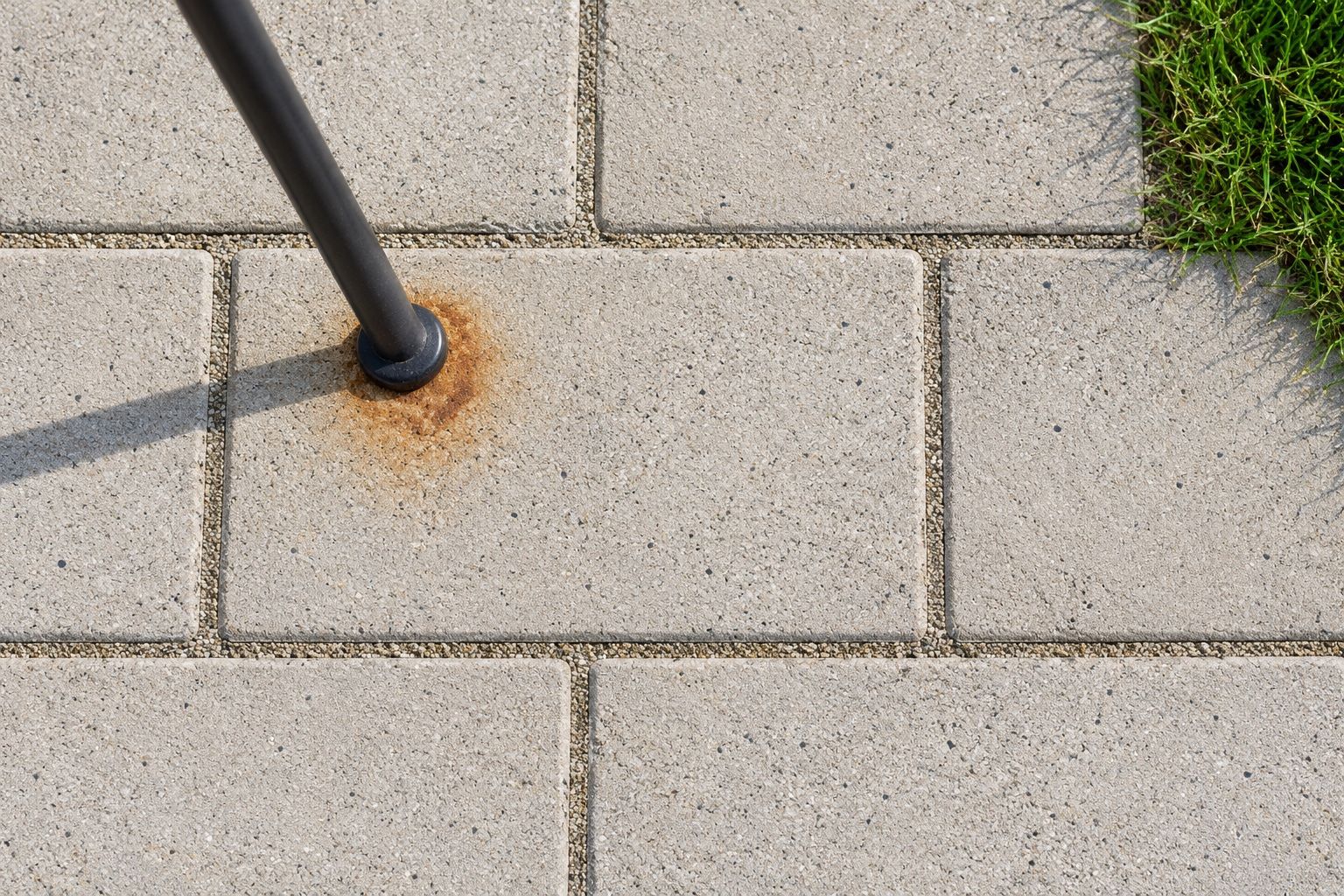
Do not seal over a suspected rust stain to hide it. First establish what the surface is, investigate the likely source, and assess a compatible treatment. Orange or brown coloring alone does not identify the cause. Before approving a new finish, decide what improvement is realistic, what discoloration might remain, and whether something on the property is still contributing to the marks.
For paver cleaning and sealing in Palm Beach Gardens, that assessment belongs ahead of the finish choice. A useful proposal explains the stained area and its uncertainties so you can judge the work on more than a promise of brighter pavers.
Read the pattern and collect the history
Take photographs when the pavers are dry: one showing the surrounding space and closer views of the marks. Include nearby furniture, the lawn edge, and any area reached by irrigation splash. Keep an unedited set so changes in phone filters or contrast do not become part of the discussion.
A ring around a metal chair foot, scattered marks near recently treated turf, and discoloration following a splash pattern suggest different questions. Check whether furniture has moved, when the marks first appeared, and whether they returned after earlier cleaning. These observations are clues to investigate. They cannot diagnose a stain or establish the composition of your water.
UF/IFAS explains that oxidation of iron sulfate on surfaces such as driveways and patios can leave reddish-brown stains in Iron for Florida Turfgrasses. That makes fertilizer history relevant: keep the lawn service record or product label if available. A recent application is information for the assessment, not proof that it caused every orange patch.
If the concern is a white haze, our guide to efflorescence on pavers addresses that separate issue. Photograph distinct patches separately instead of treating every surface mark as the same problem.
Identify the surface before choosing a cleaner
Find the original material invoice, an installation record, or information from a retained spare. Establish whether the area contains concrete pavers or natural stone, and identify any different material used in borders. A pale surface or rectangular shape is not enough information to select a treatment.
The Rust Remover for Pavers technical data sheet, bearing a January 13, 2023 update, illustrates why compatibility matters. It covers bare or sealed concrete pavers, requires a trial on a concealed stain, and excludes natural stone lacking acid resistance, wet-cast pavers, and poured or stamped concrete. This is a specific product example, not a recommendation or a statement that we use or sell it.
Also gather the name of any existing sealer and details of earlier cleaners. Explain what was used, where, and what changed afterward. If records are missing, say so. An unknown surface or treatment history is a reason to pause product selection and request identification, not to work through a succession of guessed remedies.
Make the test area a decision point
CMHA’s Cleaning, Sealing and Joint Sand Stabilization of Interlocking Concrete Pavement places localized stain treatment ahead of overall cleaning and sealing. Its guidance calls for identifying the stain, evaluating a discreet trial area, and following the selected products’ directions and precautions.
Before the trial, agree on what you want to learn. Is the mark beside the dining chair the main concern, or would a lighter but still visible outline be acceptable? Identify a representative location and keep a photograph of it with your notes.
Ask to review the dry result from the places where you normally see the surface, including the doorway or seating area. Discuss any remaining outline and any apparent difference in texture or color around it. Record which parts of the result you accept before authorizing broader work. A small trial informs that decision; it does not guarantee identical results across every stained paver.
Separate stain work from the wider clean and seal
A rust assessment and a general refresh answer different homeowner needs. Ask for the proposed work to be separated clearly enough that you can choose what your property needs.
| Proposed work | Decision it should help you make |
|---|---|
| Localized stain assessment and treatment | Is the expected improvement worth proceeding with, given the remaining marks? |
| Overall cleaning and joint re-sanding where needed | Which surrounding areas and depleted joints belong in the maintenance scope? |
| Sealing after preparation is accepted | Is the proposed finish appropriate for the identified surface and existing treatment? |
| Investigation of a continuing source | Who will address the furniture, lawn-care practice, or splash pattern being investigated? |
Assign responsibility for that last item. If the assessment links marks to a deteriorating furniture foot, discuss correcting that contact before returning the chair. If a lawn treatment or irrigation pattern needs investigation, share the photographs with the person responsible for it. Keep suspected causes clearly distinguished from confirmed findings.
To discuss these options, request a consultation through our paver cleaning and sealing service. Provide dry photographs and your treatment history for review, then ask for a site check and a proposal separating localized stain work, wider cleaning, joint work, and any sealing. That gives you a concrete scope to consider before committing to a finish.
Separate stain treatment from routine maintenance
A proposal for cleaning, joint replenishment and sealing does not by itself establish a rust treatment or guarantee stain elimination. Ask for the stain assessment, proposed treatment and expectations for your property to be recorded separately.
Put the result and next steps in writing
The written scope should let you recognize the agreed work during the final walkthrough. Attach marked photographs if that makes the boundaries clearer, and resolve these points before work begins:
- Treated zone: Identify the affected pavers, included borders, and surrounding cleaning area. Record which marks remain after the trial and the outcome you have agreed to accept.
- Adjacent surfaces: Identify nearby stone, metal, glass, lawn, and planting beds. Ask how each will be protected and how access to the work area will be managed.
- Household access: Assign furniture moving and vehicle relocation, and agree how the household will reach the home while work is underway.
- Follow-up: State how the completed surface will be reviewed, who receives photographs if discoloration returns, and how additional investigation or work would be proposed and approved.
If discoloration remains unacceptable, discuss whether selective replacement is appropriate and compare the available match with the surrounding pavers. For a wider patio or driveway replacement, the overview of paver services in Palm Beach Gardens helps distinguish that construction work from a maintenance proposal.
Agree on the work before sealing
The useful endpoint is an informed choice about the surface you will live with: an accepted improvement, a remaining mark you understand, or a different scope requiring further review.
Request a paver cleaning and sealing consultation in Palm Beach Gardens with your dry photos, material records, and previous treatment details. Ask for those records to be reviewed with a site assessment, followed by proposed work that identifies the treated area, expected limitations, protection, and follow-up. Approve the sealing step once the preparation and remaining appearance have been discussed.