Cleaning Pavers in Pet-Use Areas: Set the Scope First
Plan paver cleaning where pets spend time: define surface work, unresolved odor concerns, a separate access route and product-specific return conditions.
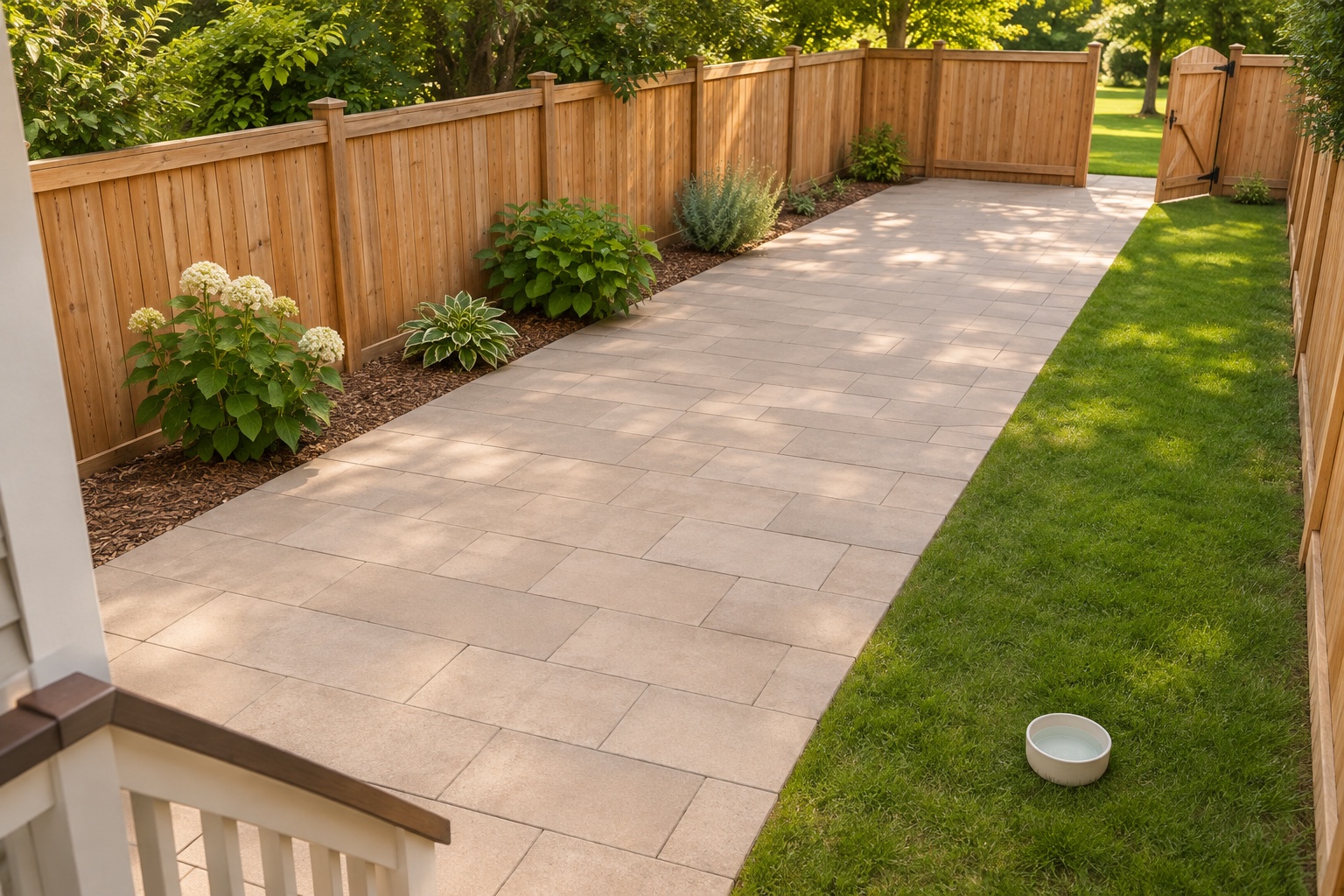
AI-generated illustration of a dry side-yard access layout with a separate grass strip and water bowl, not completed work.
Before booking cleaning for pavers your pets use, separate the surface work from any unresolved stain or odor concern. The written scope should identify the included area, previous products, proposed treatment, pet separation, an alternative route and product-specific return conditions. A cleaner appearance does not establish that an odor source has been found or addressed. Ordinary cleaning and sealing should not be understood as sterilization, a promise of urine odor removal or a blanket assurance of pet safety.
For paver cleaning and sealing in Palm Beach Gardens, bring your pet’s daily routes into the scope discussion. The useful question is which work can be assessed and agreed for the actual surface and household routine.
Describe the concern without diagnosing it
Mark visible stains on an overview photograph, then record odor concerns separately. Note where you notice an odor, whether it returns and what was happening during ordinary use when you noticed it. Include locations near the pavers as well as on them. A mark and an odor in the same general area do not, by themselves, establish a common source.
Tell the contractor what you want to change: the visible appearance, a particular mark or a recurring smell. Each needs its own response in the proposal. If the odor source beneath or near the surface has not been established, leave it recorded as unknown. Do not let a description of surface cleaning become an implied agreement to investigate below the pavers.
Disclose previous cleaning attempts and products, including anything used to mask or address an odor. Supply available labels, receipts or treatment records. When the product or application history is missing, say so. An incomplete history belongs in the assessment, rather than being filled in from memory with an uncertain product name.
Draw boundaries around the work and the routine
Imagine a household whose pet normally exits through a side door, crosses pavers and reaches a grass strip through a gate. This is a hypothetical planning example. Cleaning the pavers might close that daily route even though the grass is outside the treatment area. The proposal needs to distinguish the surface being treated from the route the household still needs.
Use recognizable endpoints, such as the door threshold, fence corner and grass edge. Identify any localized stain assessment separately from general surface cleaning. State whether adjoining grass, fence bases, thresholds and areas beneath movable pet items are excluded. Access across an area does not make that area part of the cleaning order.
A verified written scope from a Boynton Beach project separates front walkway work using pavers salvaged from the pool deck from the pool-deck work itself. It illustrates explicit area boundaries only. That record does not describe pet cleanup, sealing or odor treatment, and supplies no outcome for those services.
Choose a surface scope before adding treatment
Our paver cleaning and sealing services allow the discussion to start with the work the surface needs. Identify cleaning, any proposed joint work and optional sealing separately. Using the area for pets does not establish a reason to order every service.
CMHA’s Cleaning, Sealing and Joint Sand Stabilization of Interlocking Concrete Pavement advises a small inconspicuous trial with suitable products for concrete pavers, following product directions. Sealing is a separate consideration. Ask which surface and product the proposed trial represents.
Record who reviews the trial and how the agreed appearance will be described. A limited area approved for its appearance does not answer the unresolved odor question. If the contractor cannot identify that source within the proposed service, ask whether a separate assessment is needed and who would arrange it. Do not assume odor remediation is included or offered.
Request a site review with your marked photographs, treatment history and pet access needs. After that review, ask for a written scope separating the surface work, unresolved source questions and any excluded assessment. Review those boundaries before authorizing the work.
Keep a usable route outside the work area
Plan the full trip from an available door to the temporary outdoor destination. A grass strip is useful only if the pet and the person accompanying it can reach it without crossing the closed surface. Include regular relief trips, feeding arrangements and access needed by anyone who walks or collects the pet.
Agree who keeps pets separated from the crew and work area, who controls doors and gates, and how the crew will announce arrival. Tell the contractor if a pet door normally opens directly onto the pavers. Decide how that access will remain closed during the work instead of relying on everyone to remember it.
Move bowls, toys and bedding to the agreed location before work begins. Have the contractor assess the proposed separate route and item-storage area alongside the work boundary and water management plan. The guide to protecting surroundings before paver cleaning covers adjacent property; here, the practical priority is keeping the household’s pet routine outside the active work area.
If the alternative route becomes unavailable, contact the supervising contractor before using the usual path. Keep a fallback arrangement for a longer closure. An open gate alone is not confirmation that the route beyond it has been released.
Get return conditions that address the intended use
Before scheduling, ask for the names of the proposed products and the applicable manufacturer information. Have the contractor explain what those instructions mean for the intended pet use, including any conditions that remain unresolved. A general description of a product as suitable for outdoor surfaces does not answer when your household can resume its routine.
Ask who will confirm return, which area that confirmation covers and how changes will be communicated. Do not set your own deadline from the surface’s appearance. The guide to using a driveway after paver sealing explains separate access decisions for that setting; permission for cars or people should not be treated as an answer about pets.
The handover should also address when bowls, bedding and toys can return and who puts them back. Share the agreed instructions with household members and pet carers. If the selected product information does not resolve the intended use, obtain clarification before reopening that area to pets. Keep the alternative arrangement available while the question is pending.
If the proposed product or treatment changes after the estimate, have the written scope and return conditions updated before approving the change. When you will be away at completion, name the person receiving the handover. That person should know which gate remains closed and who still needs the instructions. The crew finishing its visit is not, by itself, the household’s signal to reopen the pet route.
Review appearance and outstanding concerns separately
CMHA’s Operation and Maintenance Guide for Interlocking Concrete Pavement includes routine maintenance and inspection for distress, such as settlement or damaged units. Those are surface-condition and maintenance questions, not evidence of pet sanitization or an odor diagnosis.
At handover, compare the treated area with the agreed scope and starting photographs. Record remaining marks, excluded areas and any outstanding assessment. Keep the return instructions with that record so the appearance review and permission to resume use are both clear.
If an odor remains or returns, report where and when you notice it to the agreed contact. Keep that observation separate from whether the surface looks cleaner. Where no source has been established, the source remains unknown. Agree the next assessment before expanding the cleaning order; neither a better appearance nor a recurring smell alone explains what happened beneath or beside the surface.
To discuss paver cleaning and sealing in Palm Beach Gardens, request a site review covering the affected pavers and your pet’s usual route. Follow that review with a written scope naming included work, unresolved concerns, separation duties, alternative access and product-specific return conditions. That gives you a defined proposal to consider before scheduling.