Clean One Paver Area or the Whole Surface?
Considering cleaning just one dirty paver area? Define its boundaries, compare dry adjoining surfaces and agree appearance limits before approving the scope.
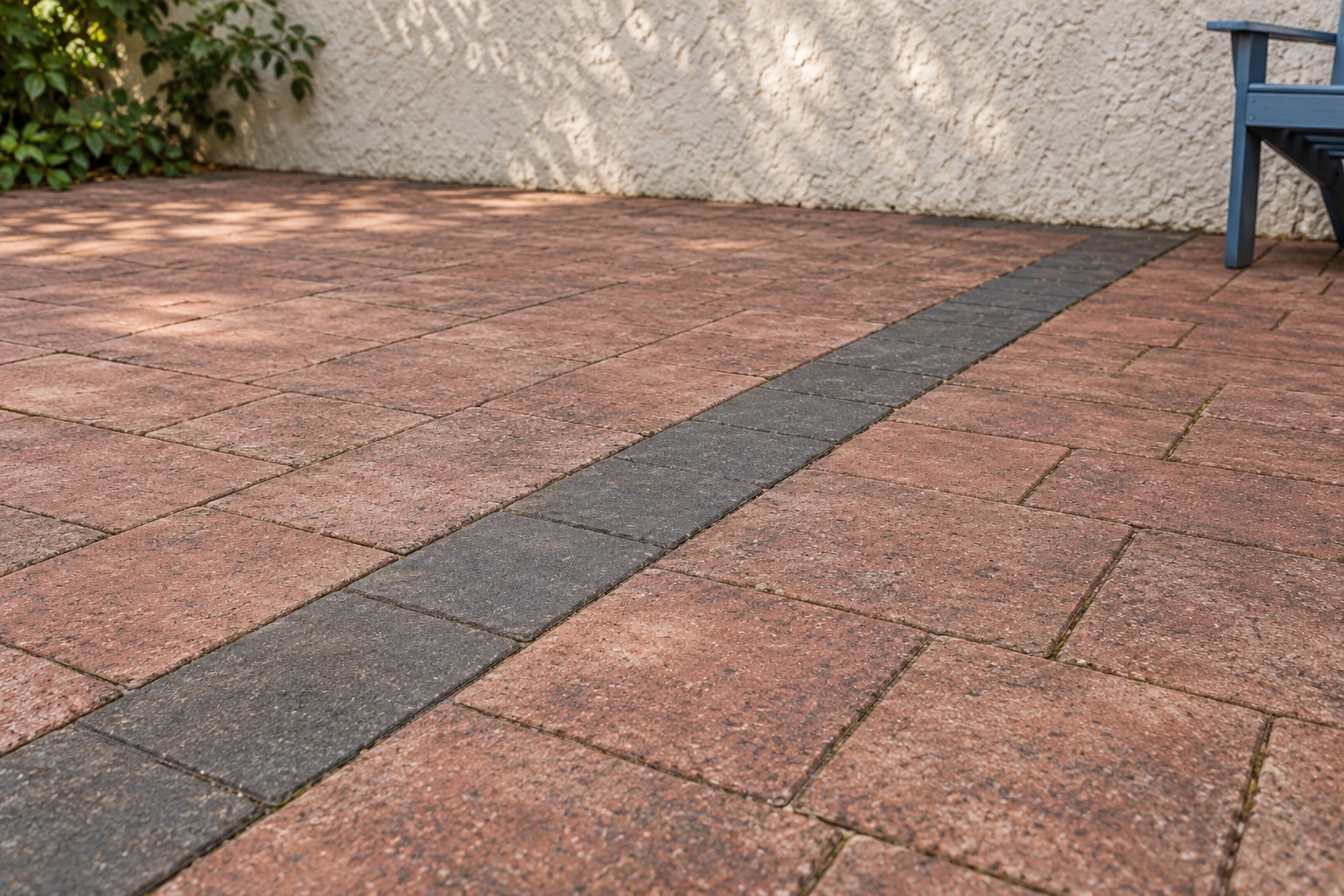
AI illustration of an existing terrace boundary, not a completed project or an installation detail.
You may be able to clean only the visibly dirty part of a paver surface. The decision depends on where that area ends, how it connects visually to untreated pavers and what a professional assessment shows. Agree the treatment boundary and appearance expectations before authorizing work. Cleaning a larger connected area can be an option, but neither a visible line nor a need to clean everything should be assumed.
For paver cleaning and sealing in Boynton Beach, start with a specific question: can the proposed section be treated independently, and how will its dry appearance be compared with the surrounding surface?
Compare the affected area with what will remain untouched
A close photograph of the dirty patch identifies the concern, but it leaves out the surface you will see beside it. Add an overview showing the proposed area, its edges and the pavers beyond. Ask the professional to compare both the affected and adjacent surfaces when dry, before deciding what the proposal should cover.
Show the view that matters to you, such as the terrace seen from a doorway or seating area. A section may have a convenient physical edge while still reading as part of one continuous space. Explain whether your priority is improving a defined section or achieving a more consistent appearance across that view.
Possible contrast deserves discussion, not a prediction that cleaning inevitably leaves a line. Ask how any difference will be assessed and what happens if you find it distracting. A wider proposal is worth considering only when its purpose and limits are clear.
Separate the services before choosing their extent
The paver cleaning and sealing service options are a starting point for that discussion. The proposal should identify which of these distinct services is being considered:
- Spot stain treatment: A targeted response to an identified mark. Its purpose and location should be stated separately from general cleaning.
- Area-wide cleaning: Cleaning throughout a named section, such as a terrace inside a border. The section might be part of the property or the entire connected surface; the wording should say which.
- Repairs: Work addressing identified physical concerns. A cleaning authorization should not silently become permission to repair or replace pavers.
- Sealing: A separate surface-treatment decision, with its own proposed extent and approval. Choosing cleaning does not automatically select sealing.
For concrete pavers, CMHA’s Operation and Maintenance Guide for Interlocking Concrete Pavement distinguishes visual distress from problems affecting structural performance and connects inspection findings with appropriate remedies. That distinction supports evaluating repair concerns separately from an appearance-focused cleaning request.
You do not have to select every service. Ask the contractor to explain which items are proposed, which remain uncertain and which are outside the requested work. Keep observations about joints, movement or damaged units available for assessment without deciding the remedy yourself.
Give the cleaning area a recognizable boundary
Walk the perimeter with the professional and identify existing edges, border courses or changes in material. Mark the proposed limit on an overview photo. If the desired stopping point crosses an uninterrupted field of pavers, show that clearly rather than describing it only as the dirty part.
Specify whether the border itself is included. A dark band between terrace sections is a useful reference, but both people still need to agree whether treatment stops before it, includes it or continues beyond it. Name each adjoining zone that will remain untreated and note whether it connects visually to the selected area.
Record the material and known coating history for each affected zone. Attach available installation or maintenance records, and identify unknowns as unknowns. A record for one section should not be treated as proof of what was applied to its neighbor.
If the pavers continue without a break, ask whether the same material and coating history actually continue too. A visually continuous layout is not a reason to assume identical treatment records.
Our written Boynton scope itemizes a front walkway separately from a pool-deck area. It demonstrates naming distinct work areas in a proposal. It does not document cleaning, partial cleaning, sealing or an appearance outcome. The relevant practice is the separation of areas, without assuming anything about their maintenance.
Use a professional test to inform the decision
For concrete pavers, CMHA’s Cleaning, Sealing and Joint Sand Stabilization of Interlocking Concrete Pavement recommends matching the cleaner to the identified stain, using products intended for concrete pavers, following product instructions and evaluating a small test area. These are grounds for a professional assessment, not a universal cleaning method for every material.
Ask the professional to propose and document a test within the area under consideration. Agree its location and extent before it is performed. Discuss why that location is useful and whether other parts of the proposed area have a different material or treatment history.
Review the test response against adjacent dry surfaces under the professional’s assessment plan. A wet section beside a dry one should not settle the appearance decision. Ask when the test can be meaningfully reviewed; do not impose a generic number of drying hours.
The test shows the local response where it was performed. It does not guarantee uniform restoration throughout the selected section or establish what an untouched zone would look like after treatment. Record what the comparison supports, what remains uncertain and whether you want a revised proposal.
Request a consultation with overview photos, your proposed boundary and available treatment records. The next step is a site assessment to compare the dry adjoining surfaces and discuss a professional test, followed by a defined cleaning proposal for your review.
Write down what the crew may treat
Before work begins, make the scope specific enough that the crew can identify the same limits you approved. Include:
- Treatment area: Named sections, marked boundaries, included borders and the service authorized in each section.
- Protected adjacent areas: Untreated pavers and nearby features that need protection, with the proposed arrangements identified.
- Access: The route to the work area, any household route that needs to remain available and how access changes will be communicated.
- Joint review: Who assesses the joints and whether any resulting work is included or needs a separate proposal.
- Appearance limits: What the test established, any remaining differences discussed and how the finished area will be reviewed.
- Expansion approval: Any added area or service requires separate approval before the crew expands the scope.
Use the guide to protecting surroundings before paver cleaning for the adjacent-area discussion. Being outside the treatment boundary should not make a surface disappear from the plan.
If a broader area is recommended during work, ask for the reason and revised boundaries before deciding. An unsatisfactory comparison is a reason to pause and discuss options, not automatic authorization to continue across the terrace.
Choose the extent you are prepared to approve
A limited proposal can make sense when its boundaries are clear, the professional’s findings support it and you accept the discussed appearance limits. A larger connected area may deserve consideration when the overall view matters more to you and the contractor can explain what expanding the work would address. Neither choice promises identical color or a particular saving.
If sealing is later proposed, use the paver sealer finish-test guide for that separate decision. Approval of a cleaning test should not double as approval of a finish or an expanded sealing area.
At the agreed review with the contractor, compare the actual treatment with the marked scope and record unresolved appearance concerns. Keep any proposed follow-up separate until its purpose and extent are understood.
For a consultation about partial-area paver cleaning in Boynton Beach, send photos showing both the affected section and its untouched neighbors. Ask us to assess the proposed stopping point, discuss how dry appearance will be reviewed and prepare an itemized scope before you approve treatment.