Oil Stains on Pavers: What to Assess Before Sealing
Assess suspected oil stains on concrete pavers before sealing. Review the source, old coatings, treatment tests and remaining marks in a clear written scope.
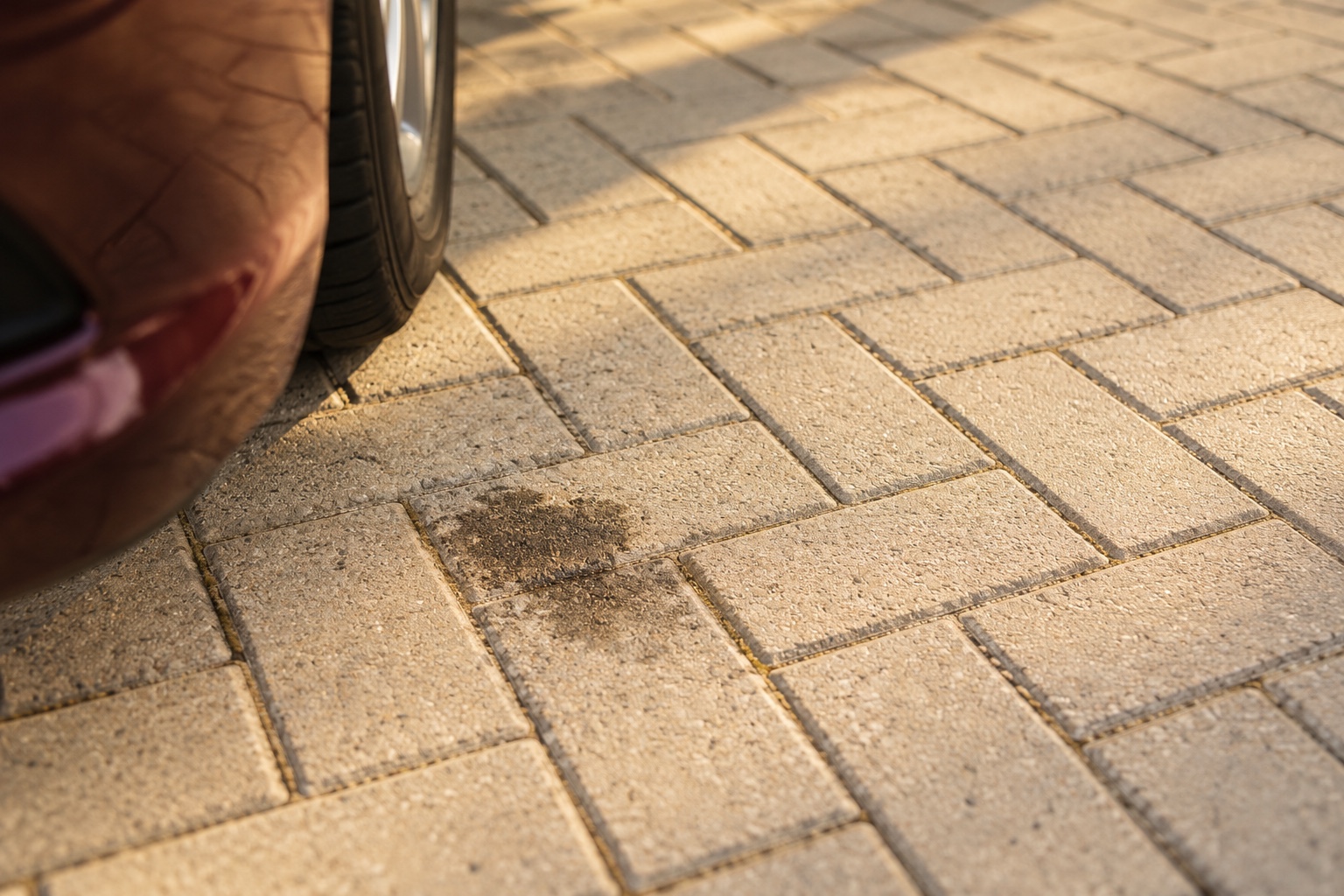
AI illustration: an oil-like mark, not a diagnosis or completed project.
Before sealing concrete pavers with a suspected oil stain, establish what caused the mark, whether it is recurring and what coating or cleaners are already on the surface. A dark patch alone does not identify oil. Have a professional assess an appropriate treatment and small test area, then agree how any remaining shadow will be handled. Correct an ongoing leak through the appropriate professional first. Sealing belongs later, as a separate protection and finish decision; it will not erase the stain or make the driveway oilproof.
For paver cleaning and sealing in Wellington, the starting point is the condition of your existing driveway and its stain history. Those details help define what the assessment needs to resolve.
Build a stain history before choosing treatment
Describe what you know without turning a suspicion into a diagnosis. A mark beneath a parked vehicle or beside a barbecue gives the contractor a possible source to investigate. Neither location proves that the discoloration is oil. Rust, organic staining and moisture-related darkening need their own assessment.
Prepare a short record:
- First appearance: when you noticed the mark, whether it followed a known spill and whether older photographs show it.
- Recurrence: whether it has stayed similar, spread or returned after an earlier cleaning attempt.
- Previous products: cleaner names, coating records and any information about the spilled substance, including whether an oil was synthetic.
- Current condition: nearby chips, loose units or coating changes that deserve attention independently of the stain.
Photograph the dry surface close up and from farther away, keeping the same camera position and similar light for later comparisons. Include enough of the driveway to locate the patch. Tell the contractor about unsuccessful attempts as well as apparent improvements; a missing product name should remain an explicit unknown.
Address a recurring source first
If a vehicle or other equipment is still leaking, arrange correction by the appropriate professional before expecting a lasting improvement in the driveway’s appearance. Surface work cannot stop the source. Keep the repair record separate from the paver treatment proposal so each provider’s responsibility is clear.
A useful assessment distinguishes an old, stable mark from repeated deposits. Explain what has changed since the last attempt: a repaired leak, a different parking position or another known spill. If the source remains uncertain, ask the contractor what can reasonably be assessed now and which treatment decisions should wait.
Match the product to the actual surface and stain
One product’s label illustrates why a generic request for a degreaser is insufficient. The Gator XP Oil & Grease Remover application instructions warn that it can damage an existing seal and require testing on sealed surfaces. They also advise against this product for synthetic oil stains and say earlier cleaners can reduce its effectiveness. These are limitations of that named product, not every oil remover. This example is neither a recommendation nor a statement that our company uses it.
Give the professional your concrete-paver and coating records before a treatment is selected. Ask how an unknown old sealer affects the assessment and whether coating work would need separate authorization. A proposal that simply lists stain removal leaves those decisions unresolved.
Use a small test to set a realistic target
CMHA’s Cleaning, Sealing and Joint Sand Stabilization of Interlocking Concrete Pavement calls for identifying stains before cleaner selection and evaluating treatment in a discreet stained area. It notes that deeply embedded oil may require further applications. Its sequence puts localized stain work ahead of overall cleaning and preparation for sealing; difficult small areas may instead warrant replacement.
Have the professional choose a small evaluation area suited to the actual concrete, stain and old coating. Agree on its location and the decision it will inform before work begins. Record the proposed treatment so the review refers to a known intervention.
Inspect the result together when the professional says it is ready for assessment under the selected product’s guidance. Compare it with your dry baseline photographs, then look from the distance at which you normally see the driveway. Discuss both the remaining shadow and the surrounding surface. An improvement visible close up may still fall short of your entrance’s appearance goals.
Request a photo review and site assessment through our paver cleaning and sealing service. Share the stain history and product records so the consultation can identify unresolved questions, a suitable evaluation area and the work that needs its own scope.
Choose the next step before expanding the work
Use the evaluation to choose among clearly described outcomes:
- Accept the improvement: record the remaining mark you are willing to live with, including its location and appearance.
- Consider further treatment: ask what the additional work aims to change and how you will approve it. Do not authorize an undefined series of attempts.
- Assess localized replacement: review available units and the proposed repair boundary before deciding whether that visual tradeoff is worthwhile.
Replacement units are not guaranteed to match weathered pavers. Compare an actual candidate beside the existing surface and discuss what happens if the original color or shape is unavailable. A darker shadow and a visibly different replacement are separate appearance choices.
If inspection also reveals widespread damage or a driveway that needs broader renewal, driveway pavers installation in Wellington becomes a relevant alternative to evaluate. Ask for the condition findings behind that recommendation. One isolated stain alone is not a reason to replace an otherwise serviceable driveway.
Ask for a proposal with separate work items
The written assessment should distinguish what is known, what the test established and what remains conditional. Compare proposals against the same photographs and included area, using separate entries for:
- Localized stain work: identified locations, proposed treatment, expected improvement and approval of any further attempts.
- Overall cleaning and joints: the driveway area included and the joint work actually needed, with repairs identified separately.
- Existing coating: what is known about it and any separately scoped assessment, removal or corrective work.
- Possible sealing: the compatible product proposed, preparation requirements and who confirms readiness under its instructions.
Include a review point before sealing proceeds. Specify who discusses unexpected findings with you and how changes are approved. This makes the estimate useful even if the test leads to a smaller maintenance job or a separate repair proposal.
Keep stain treatment identifiable in the estimate
Identify cleaning, joint work and any sealing separately in your proposal. Your stain proposal also needs its own assessment, treatment expectations and acceptance criteria; a general maintenance description does not establish an oil-removal treatment or result.
Make the finish decision after the stain assessment
Keep stain acceptance and finish approval as separate decisions. If a shadow remains unacceptable, do not ask a darker or glossier sealer to hide it. Our guide to approving a paver sealer finish test explains how to review the proposed appearance on your own surface once preparation and compatibility have been addressed.
Request a written assessment through paver cleaning and sealing in Wellington. Ask us to review the photos and site, separate stain treatment from overall cleaning and joints, and identify whether any later sealing is appropriate. Bring your appearance priorities so the proposal records both the work and the limits of the expected result.