Leaf Stains on Pavers: What to Check Before Sealing
Suspect leaf stains on your pavers? Record recurring marks, identify the surface and old sealer, and discuss cleaning results before deciding whether to seal.
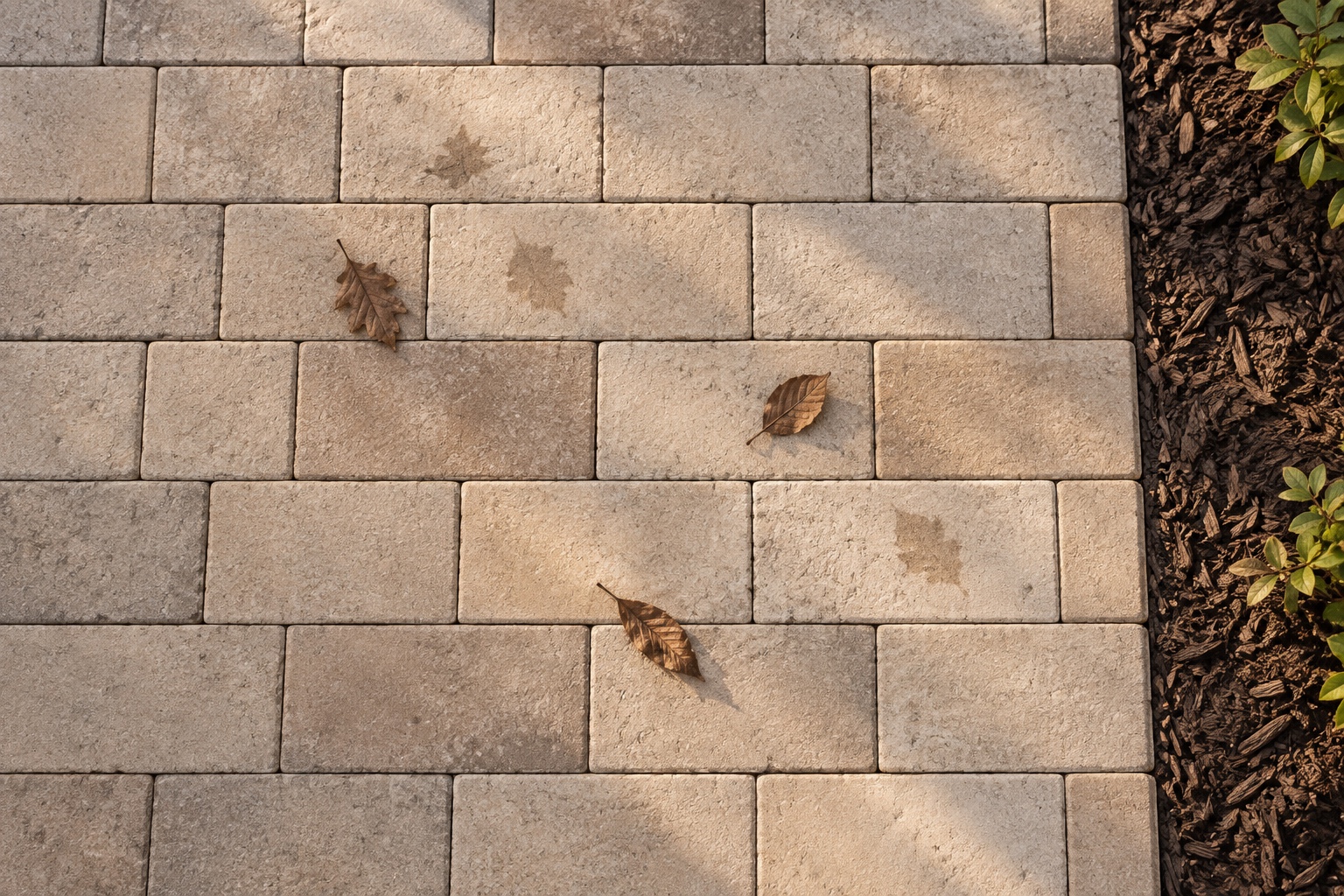
AI-generated illustration, not completed work or diagnostic proof.
Before sealing pavers with suspected leaf stains, gently remove loose leaves as part of ordinary surface care, then record any marks that remain. A leaf-shaped outline or brown color cannot establish the cause. Identify the paver material and existing sealer before choosing a treatment. Have unclear or persistent discoloration assessed, and discuss the expected appearance after evaluation. Sealing is a separate choice, not a way to hide stains or a guarantee against their return.
For paver cleaning and sealing in Palm Beach Gardens, this starts with describing what you found and where, so the assessment addresses the marks before you commit to a finish.
Keep a record before the scene changes
Photograph the area with the fallen leaves still visible, then lift or gently sweep away loose debris using ordinary care suitable for your surface. There is no need to scrape at an attached mark to prepare for a consultation. Once loose material is gone, photograph what remains from the same viewpoint.
Include a wider view showing the garden edge, nearby plants and the affected part of the patio or walk. Pair it with a closer view of the discoloration. A close-up alone can make a small patch look like a problem across the whole surface; the overview gives it a location and context.
Note whether the pavers were wet or dry and what you remember happening beforehand. Rain, irrigation, leaf accumulation and recent landscape work belong in that history. Write down what you observed without turning it into a cause. Water reaching a spot from a sprinkler is useful information, but it does not identify the stain.
Describe the pattern without naming its chemistry
A faint outline beneath a leaf supports a suspicion of organic residue. A brown patch without that history is a different starting point. Neither is a chemical diagnosis. Describe the shape, extent and location rather than labeling every brown mark a leaf stain.
Keep visibly different concerns separate in your notes. A leaf-like outline beside a garden bed, a broad dark area under furniture and a pale patch elsewhere need not have the same explanation. Tell the evaluator which areas had leaves on them and which did not.
If a mark remains after loose debris is removed, leave it on the assessment list. Record any cleaner already tried, including its name and the area treated. Include unsuccessful attempts as well as visible changes.
Establish which material is actually stained
Find the installation paperwork, supplier description or an old material label. Concrete pavers and natural stone need to be identified accurately; shape and color are not enough. Where records are missing, list the material as unconfirmed so identification becomes part of the assessment.
An anonymous residential pool-deck maintenance scope from Boynton Beach in our records explicitly names natural stone and lists cleaning, re-sanding and sealing. That scope does not document leaf stains, a particular chemical or a completed treatment result. It illustrates why the material must be named before choosing a treatment.
Gather the existing sealer’s name separately, with any records of later applications. If the patio has stone borders or steps beside concrete pavers, mark those transitions on the overview. Our guide to cleaning stone beside concrete pavers explains how to organize a plan around those adjoining surfaces.
Let identification and a test guide the treatment discussion
CMHA’s Cleaning, Sealing and Joint Sand Stabilization of Interlocking Concrete Pavement calls for identifying stains before selecting a cleaner, evaluating an appropriate product on an inconspicuous stained area, and preparing the surface before sealing. Its guidance is for concrete pavers; it is not a universal treatment instruction for natural stone.
Techniseal’s Organic Stain Remover for Pavers technical data sheet lists stains from dead leaves in its product description. It requires a small hidden test and prohibits mixing it with other chemicals. This is a product-specific example, not an endorsement or a statement that our company uses it. The actual surface, coating and current label must govern selection.
For the homeowner, the useful question is what the evaluation establishes about this particular area. Ask the contractor to explain the proposed treatment and the appearance it is reasonable to expect. A recommendation should connect your material and documented history to the work being proposed, rather than begin and end with the color of the mark.
Separate recurring marks from repair concerns
If debris collects again, add another observation to the same location record. Note where leaves gather, whether irrigation reaches the area and which spots remain visibly wet while nearby pavers look dry. Share those observations with the maintenance contractor and, where relevant, the person managing the landscape or irrigation. They are questions to investigate, not proof that a tree, sprinkler or drainage defect caused the discoloration.
Uneven, moving or broken units deserve their own entry. Photograph them in context and point them out during the assessment, even if they sit beside the suspected leaf marks. Do not let a conversation about appearance absorb a separate question about the condition of the installation. Our guide to paver cleaning versus repair in Palm Beach Gardens helps distinguish those proposed tasks.
Request a consultation through our paver cleaning and sealing service once you have assembled the photos and available records. Ask for a review of the affected locations, unresolved material or coating questions, and any separate repair concerns. Use that discussion to establish what needs assessment before authorizing treatment.
Prepare a useful site assessment
Keep the information together so the person inspecting the surface can follow the same history you have been tracking:
- Location photos: An overview and close-ups, with the same spots recognizable across images. Include a nearby area without the marks for context.
- Surface records: The paver material, any adjoining stone and the existing sealer details. Flag missing information instead of guessing.
- Observation history: Where leaves were found, when you first noticed the marks, and whether they recur in those locations.
- Previous care: Product names and treated areas, plus any known changes after earlier cleaning. Distinguish recollections from written records.
- Your priorities: Which marks bother you from the house or seating area, whether you want to preserve the current appearance, and which repair concerns need separate attention.
Identify the included area on a photo or simple sketch. A scattered group of marks near the garden edge and discoloration across the patio are different requests. Agree on which locations the proposal covers and how further work would be discussed if the assessment raises another issue.
Review the appearance before choosing sealing
After evaluation, discuss any retained marks in the context of how you use the space. Look from the doorway or seating area as well as close up, and keep notes about the conditions in which you viewed it. Decide whether the proposed result addresses your concern before agreeing to the next stage.
Ask for cleaning and any proposed sealing to be described separately in the written scope. Discuss what happens if cleaning leaves a visible trace: accepting that appearance, obtaining further assessment or revising the scope are separate decisions. Clarify whether sealing serves an agreed maintenance or appearance goal, and what future surface care would involve. Keep the recurrence record even if you proceed, so later conversations start with an actual history.
To discuss your next step, request a paver cleaning and sealing consultation in Palm Beach Gardens. Share your photos, material information and previous treatment history. Ask for a proposed scope that identifies the areas to assess, the expected appearance and any unresolved questions, with sealing presented as a separate decision you can review.