Cleaning Pavers After Nearby Construction
Plan cleanup of existing pavers after nearby renovation: document residue, agree contractor responsibilities, and separate cleaning, repairs and optional sealing.
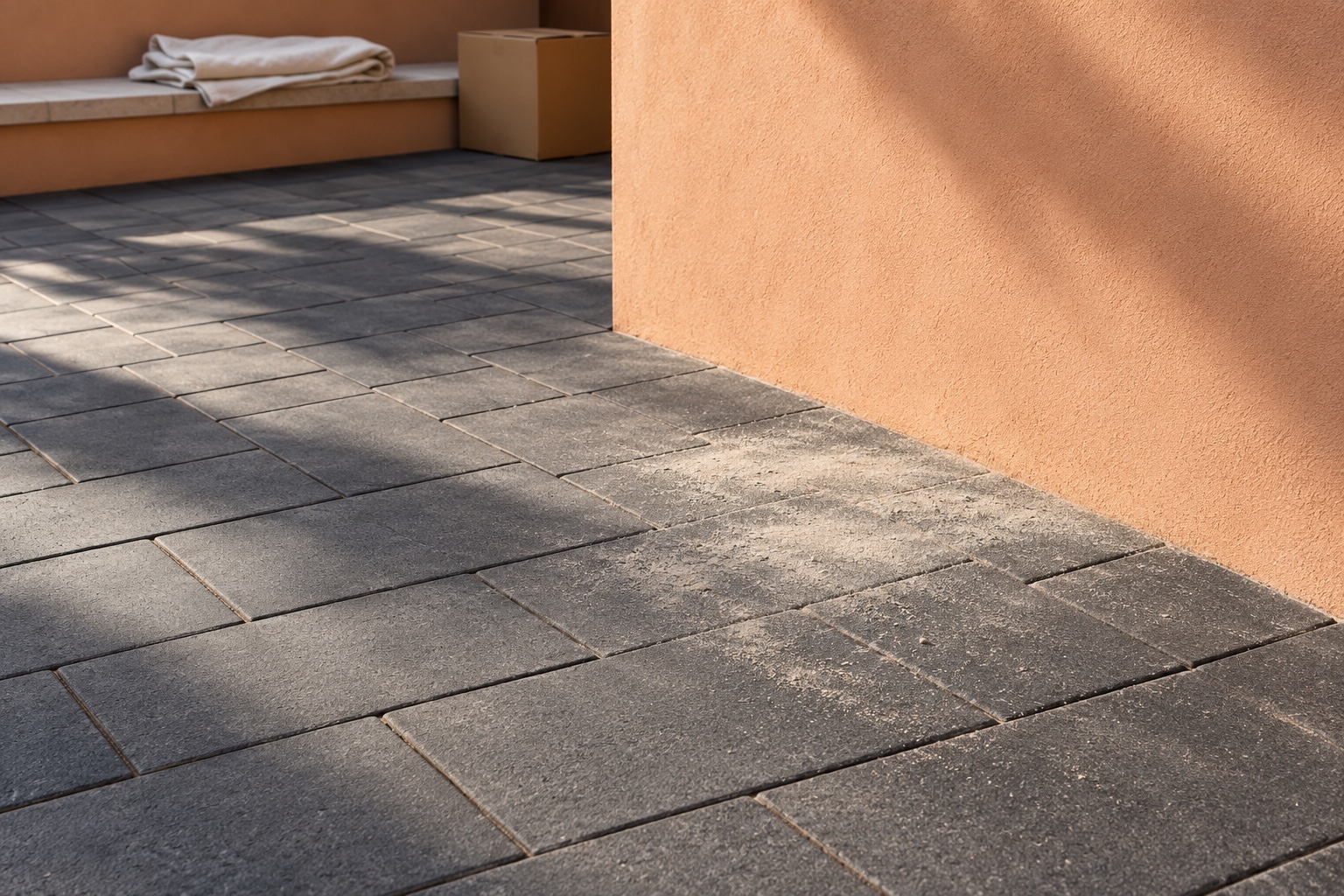
AI illustration of light dust on an existing paver courtyard, not a completed project or an installation detail.
When nearby construction leaves dust or residue on existing pavers, start with a documented handover and a professional assessment. Record the surface’s earlier condition, identify nearby work from contractor records, and agree who handles each part of the cleanup. The cleaner should distinguish loose debris, bonded residue and possible coating concerns before proposing work. Keep repair and optional sealing separate, without assuming the original appearance can be restored.
For paver cleaning and sealing in Boynton Beach, a general construction cleanup allowance is only a starting point. The written scope needs to connect each affected area with a proposed service and identify anything still awaiting evaluation.
Reconstruct what changed around the pavers
Begin with photographs taken before the adjacent renovation, if available. Ordinary property photos may provide context even when they were not intended as condition records. Keep their dates and original files. If no earlier images exist, say so; a present photograph cannot establish exactly how the surface looked before work began.
Collect installation paperwork and records of previous cleaning or coatings. Match each document to the relevant courtyard, path or driveway. An invoice for one area should not become evidence of what was applied elsewhere. If the paver material or coating is unknown, leave that question open for the professional to resolve.
Ask the renovation contractor for a record of work beside or above the affected surface. Useful information includes the tasks performed, products used, locations of material storage and any cleanup already attempted. Record who supplied each detail. A homeowner’s recollection and a product identified in the contractor’s paperwork should remain distinguishable.
Describe the earlier surface honestly, including known marks or wear. The purpose is an agreed starting point for the discussion, not a claim that every visible difference was caused by the latest renovation.
Map the residue without diagnosing it by color
Take an overview showing where the affected pavers sit in relation to the renovation. Add closer photographs of the visible deposits and label their locations. Note whether the residue appears concentrated along a wall, scattered across a route or confined to isolated spots. Describe distribution without assuming that proximity proves its origin.
Do not call every white deposit efflorescence. Likewise, identify concrete, mortar or paint residue through the work history and product records, not simply because a spot looks pale, hard or colored. Where the records do not establish an identity, describe the deposit as unidentified and tell the cleaning professional what remains unknown.
Include any reported previous attempt to remove it, even if the result was disappointing. Keep the original description and photographs rather than trying another treatment to demonstrate the problem. The assessment should begin with the surface as it is and an accurate account of what has already happened.
Ask for an assessment before agreeing to treatment
Have the cleaning professional evaluate whether each concern involves loose debris, bonded residue, an existing coating or an unresolved combination. Ask what supports that assessment and what additional information is needed. A proposal can contain an investigation stage; it does not need to pretend every patch has already been identified.
For concrete pavers, CMHA’s Cleaning, Sealing and Joint Sand Stabilization of Interlocking Concrete Pavement calls for cleaners intended for concrete pavers, a small trial to assess results, and compliance with product instructions. Ask the cleaning professional to select a compatible process and test area, documenting its location, findings and limits before broader authorization.
CMHA’s Operation and Maintenance Guide for Interlocking Concrete Pavement distinguishes appearance concerns from distress affecting structural performance. If you have noticed loose, damaged or uneven pavers, request a separate repair assessment. A cleaner surface alone would not establish that those concerns have been resolved.
Put each part of the cleanup in writing
The available paver cleaning and sealing service options provide a framework for discussing maintenance, but the construction handover needs its own boundaries. Ask both contractors to identify where their proposed work begins and ends, using the same area names and photographs.
Separate these items in the written proposal:
- Construction-debris removal: Name the loose construction materials and discarded items included, the areas covered and the party assigned to remove them. Keep this distinct from specialist surface treatment.
- Specialist residue treatment: Identify the deposits being assessed, the authorized area and any exclusions. State what happens if the findings differ from the initial description or further work needs approval.
- Joint-sand review: Specify who evaluates the joints and whether any resulting work is included or requires a separate proposal. Do not let a general cleanup description decide that scope by default.
- Repair: List any repairs proposed after assessment separately, with approval required before expanding the work.
- Optional sealing: Show it as a separate decision, with any unresolved conditions recorded before authorization.
Compare proposals against that same division of work. If one price combines debris removal and specialist treatment, ask for the included areas and exclusions before comparing it with another offer.
In our written Boynton project scope, a front walkway is itemized separately from a pool-deck area. That record does not document construction-dust cleaning, residue treatment, sealing or a cleaning outcome. Its narrow relevance here is that distinct areas can be identified separately in the paperwork.
Request a consultation and share your location photos, available surface records and renovation scope. The next step is an on-site assessment to identify the proposed cleaning areas and outstanding questions, followed by an itemized scope for your review before treatment approval.
Coordinate with construction that is still continuing
Tell the cleaner which nearby activities remain unfinished and which routes the renovation crew still uses. Ask the renovation contractor to identify work that could affect the pavers again. Coordinate maintenance around those activities rather than assigning a fixed waiting period after construction.
If an interim cleanup is proposed, label it as interim and define its purpose. Agree who reassesses the area after remaining work, whether another visit would require separate authorization, and who communicates schedule changes. This prevents a homeowner from treating an early cleanup as the final handover while another crew still expects access.
Agree practical responsibilities directly with the renovation contractor: who removes materials, who commissions specialist assessment, who authorizes added work and who participates in the final review.
Once the cleaning scope is understood, use our guide to protecting surroundings before paver cleaning for the separate preparation discussion. Here, the unresolved question is what the construction handover includes and what remains for the cleaning specialist.
Keep sealing out of the unresolved cleanup decision
Sealing is not an automatic cure for leftover contamination. Do not bundle it into the handover simply because the surface still looks different. Ask whether the residue assessment is complete and which concerns remain open before considering an optional finish.
If sealing remains under consideration, our paver sealer finish-test guide covers that separate approval. Keep the cleanup findings and the finish decision in separate records so that agreement on one cannot be mistaken for agreement on both.
Review the handover by area
At the agreed review, compare the work with the named areas and authorized scope. Record what was done, what remains visible, which items were excluded and which questions need another assessment. Ask for any changes from the original proposal to appear in the final record.
A remaining mark should receive a written explanation of what is known and uncertain, not an unsupported promise that another service will erase it. Agree who will respond to open items and what information or decision is needed next.
For a consultation about cleaning existing pavers in Boynton Beach, send the affected-area photos and the contractor’s remaining-work list. Ask us to review the handover boundaries on site and prepare a proposed maintenance scope that distinguishes authorized work from unresolved residue, repair and optional sealing decisions.