Pressure Washer Marks on Pavers: Assess Before Sealing
See bands or arcs after washing concrete pavers? Record the surface and treatment history, request an inspection, and agree on a trial before further work.
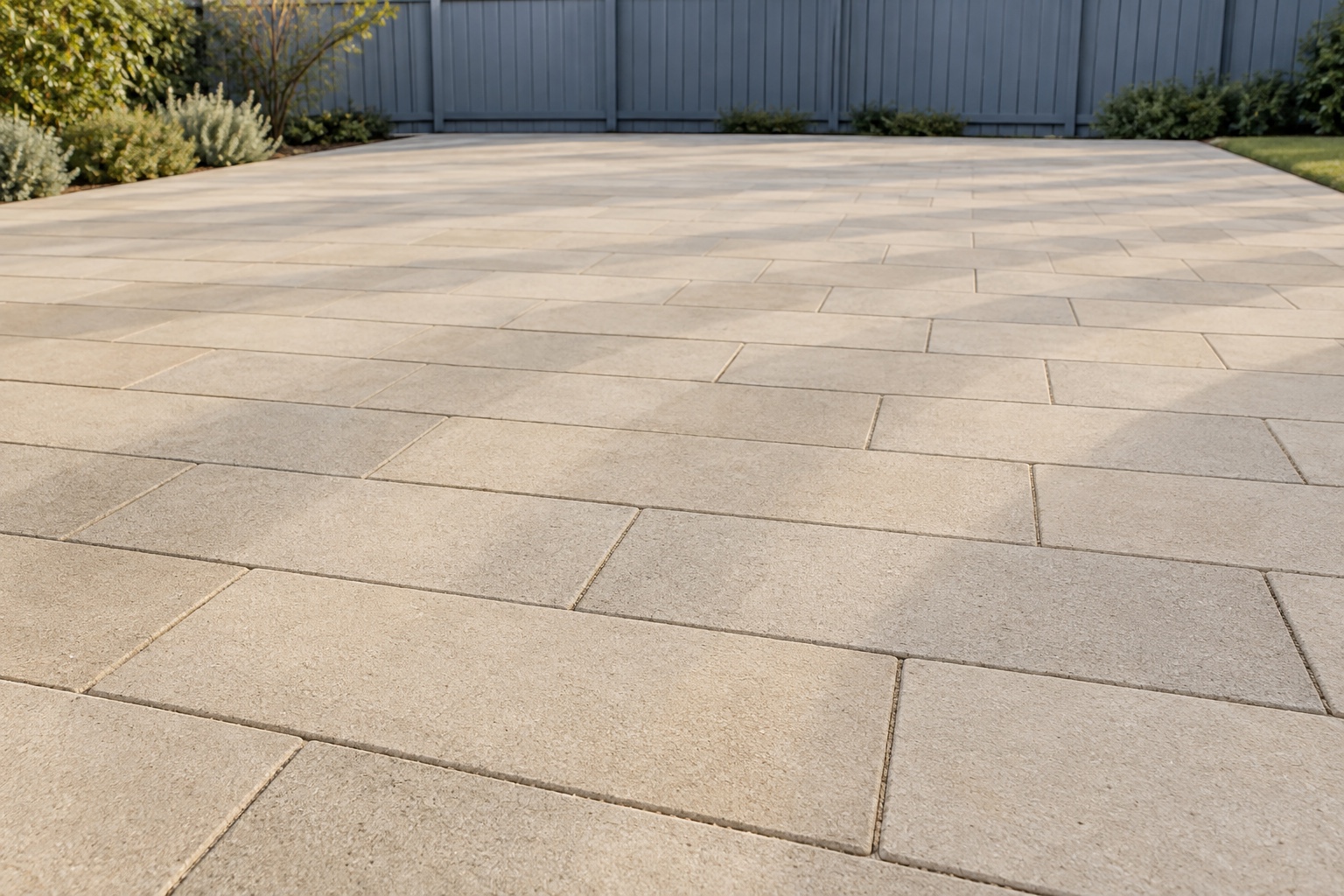
Hero image: AI illustration of surface bands. It does not establish their cause.
Pressure washer marks on concrete pavers need assessment before sealing. Bands, arcs or mottled areas after washing do not, by themselves, prove leftover dirt or permanent damage. Stop repeated aggressive passes and hold off on adding sealer to hide the pattern. Record how the area looks dry, wet and in different light, then ask for an inspection that separates uneven cleaning, coating differences, surface wear and joint loss. The remedy depends on the actual condition and the products already present.
For Wellington homeowners, paver cleaning and sealing in Wellington includes assessing the surface, joints and existing coating. Those findings should guide the proposed work.
Preserve the evidence before another pass
A stripe that follows the apparent path of a tool is useful information to record. It is not enough to choose a treatment or assign responsibility. Write down when you first noticed it: during washing, after drying, after a coating was applied, or only when the light changed. Keep any earlier photographs that show the same area.
CMHA’s Operation and Maintenance Guide for Interlocking Concrete Pavement warns that improper cleaning can damage or discolor concrete pavers. It discusses cleaners formulated for concrete pavers and professional equipment used to limit damage. It also identifies pressure washing as a possible contributor to joint sand loss. Ask the contractor to select the cleaner for your pavers and condition. The guide does not identify the cause of your particular stripe.
Keep cleaner containers, label photographs and invoices. If someone else performed the work, request their product and equipment records without assuming what went wrong. Avoid turning the whole patio into an experiment while those details are still being gathered.
Build a useful photo and history record
Make a short record that another person can follow on site. A collection of closeups without locations makes comparison difficult.
- Map the pattern. Take a broad view from a fixed landmark, then a closer view showing a band crossing several units and joints. Identify the same patch in both pictures.
- Record the surface state. Label photographs dry, damp or wet, with the date and approximate time. Use existing wet photographs or an opportunity after rain; there is no need to soak the area for evidence.
- Compare the light. Photograph the same patch under a different natural light condition when possible. Note whether you can still see the band from your normal viewing position.
- Keep an unedited set. Save original files without filters or contrast adjustments. Mark locations on copies, and include an adjacent area you consider acceptable.
- Reconstruct the work. List the wash date, repeated passes, hand wand or surface cleaner, nozzle information if known, cleaners, and any later coating. Include earlier sealer names or mark them unknown.
- Note separate concerns. Record missing joint material, movement already noticed during ordinary use, uneven units or recurring puddles. Do not deliberately rock pavers to investigate.
Distinguish observations from explanations in your notes. “Pale arcs visible after drying” is more useful than labeling the entire surface damaged. An unknown product history is also useful information; do not substitute a guess for a missing label.
Ask what the inspection needs to distinguish
The inspection should address four separate questions. Is material still present on the surface? Does the existing coating vary across the marked area? Is there a difference in the concrete surface itself? Have joints lost material? Several concerns can coexist, and a photo cannot settle all of them.
Ask the contractor to show you the evidence behind the proposed explanation and identify anything still uncertain. A recommendation to clean again should explain what that treatment is intended to remove. A recommendation involving an old coating should identify what is known about it. If surface wear is suspected, discuss what improvement is realistic and what may remain visible.
For bands accompanied by rocking, settlement or a displaced edge, record the appearance concern and the movement separately. Where inspection points toward rebuilding or replacing part of a driveway, driveway pavers installation in Wellington becomes a separate scope to discuss. A cosmetic result should not serve as acceptance of unresolved movement.
The broader guide to paver cleaning and repair in Palm Beach Gardens covers repair sequencing. Here, the immediate decision is what evidence would justify treating the newly noticed pattern.
To start that discussion, request a consultation through our paver cleaning, re-sanding and sealing service. Provide the marked area’s location, your photo record and known product history. Ask for an on-site review that identifies the questions to resolve and a written scope for any proposed trial or further work.
Agree on the trial before treating the whole area
CMHA’s Cleaning, Sealing and Joint Sand Stabilization of Interlocking Concrete Pavement explains that nozzle type and distance affect cleaning, adequate rinse flow matters, and technique should limit disturbance of joint sand. It calls for small trial applications and following product instructions; sealers can also change surface appearance. These considerations belong in the contractor’s treatment plan, not a universal pressure setting for every marked surface.
Before authorizing a trial, agree on these points:
- The question. State what the trial is meant to establish, such as whether the proposed treatment reduces the visible contrast. Avoid a vague instruction to make everything look new.
- The location. Identify the trial boundaries and the nearby comparison area on your photograph. If the selected patch misses the worst bands, ask how it represents them.
- The review conditions. Agree when the result can be assessed under the selected product’s instructions. Compare it dry, from agreed viewing positions and under comparable light. Keep wet appearance as a separate observation.
- The acceptable result. Record the remaining contrast you are willing to accept, alongside any texture, sheen or joint concerns. Photograph the accepted result together so the reference is clear.
- The stopping point. Agree that an unsatisfactory or uncertain result prompts a discussion before expanding the treatment. Confirm the trial’s charge and who authorizes any additional work.
Approval of a cleaning result is not automatic approval of a coating. If sealing is proposed, discuss its appearance separately. A darker or glossier surface is not proof that worn concrete has been repaired, and sealer should not be sold as a guaranteed way to camouflage bands.
Separate the tasks in your proposal
Cleaning, joint restoration, old-coating work and replacement units should be identifiable wherever they are included. Ask which are excluded and what finding would trigger a separate estimate. A finished photograph does not establish a suitable product, repair method or likely result for the marks at your property.
Make the next approval specific
Before approving the full area, keep the proposed method, trial record, remaining marks and exclusions together. If replacement is recommended, ask which units are involved and how their appearance will compare with the retained surface. Site conditions and the selected products’ instructions should govern the next steps and readiness for coating.
For a consultation about paver cleaning and sealing in Wellington, send your observations and request an inspection before approving another wash or coat. Use the visit to agree on what needs investigation, what a trial can answer, and which work requires separate approval. The written proposal should make the intended improvement and its limits clear.