Missing Paver Joint Sand: What to Check Before Sealing
Assess recurring joint sand loss before sealing concrete pavers. Compare treatment scope, product compatibility and the checks that belong in your walkthrough.
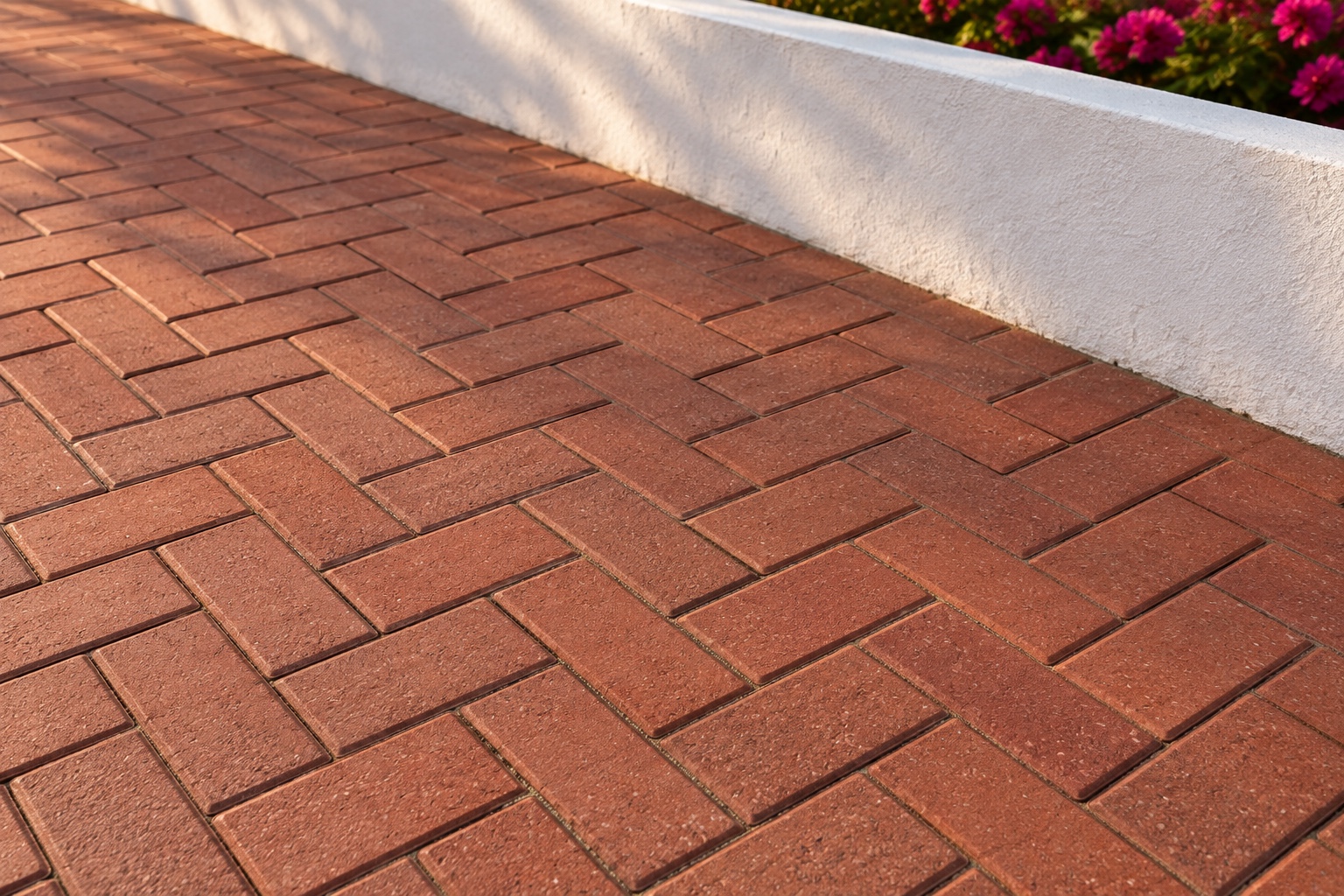
AI illustration: low joint sand between level concrete pavers.
Before agreeing to reseal concrete pavers with missing joint sand, ask for an assessment of why the material disappeared and which treatment suits the existing installation. Repeated loss, shifted pavers and a visible water path need diagnosis; a coating alone is not a repair. The decision should identify where joints need attention, what existing material can remain and whether another problem must be addressed first. A darker, freshly sealed surface cannot answer those questions.
For paver cleaning and sealing in West Palm Beach, request a joint-condition assessment before booking a reseal. Bring photos and past service records so the consultation starts with the recurring problem and the treatment options for your property.
Record the pattern without disturbing the joints
Photograph the area from an accessible, dry location after ordinary use or weather. Take a wider view that identifies the location and a closer view of the visible joints. Use the same viewpoint later so a contractor can compare changes. Do not probe the joints, lift units or pressure wash them to test how much material remains.
Keep observations separate from explanations. A dark line is something to show the contractor, not enough by itself to identify the joint material or decide how much is missing. Useful notes include:
- Extent: a few isolated gaps, one continuous strip or depleted joints spreading into neighboring sections.
- Timing: when you first noticed the loss, whether it returned after previous service and what happened between photographs.
- Surroundings: a nearby downspout, irrigation overspray or the route water followed during rain, observed without creating a test flow.
- Surface changes: pavers that appear shifted, an opening at an edge or a difference in height visible from your normal route.
Add the previous service date and any invoice or product record. If you do not know what was installed, record it as unknown. That uncertainty belongs in the assessment instead of being replaced by a guess based on sand color.
Decide what must be resolved before joint treatment
A single depleted patch and repeated loss across the same route deserve different conversations. For the patch, ask the contractor to identify its boundaries and explain the proposed preparation. For recurring loss, request an explanation of the suspected cause and what evidence supports it. Another refill without that explanation leaves you unable to judge why the next result should differ.
If water appears to cross the affected joints, have the contractor distinguish joint treatment from investigation of the water source or drainage. The proposal should identify who handles each concern and whether the maintenance work depends on a separate correction. Do not accept an unexplained drainage allowance as a complete solution.
Visible movement changes the discussion too. The guide to cleaning versus paver repair covers that broader decision. Here, the immediate question is whether the affected joints can be treated as maintenance or whether the surrounding installation needs professional assessment first.
Name each treatment in the proposal
CMHA’s Cleaning, Sealing and Joint Sand Stabilization of Interlocking Concrete Pavement explains that concentrated water flow can erode joint sand. Stabilization can limit displacement, but it does not increase load-bearing capacity. Stabilizers and sealers have different purposes, although their functions may overlap.
Ask which of these the contractor proposes:
- Conventional joint sand: granular material used to fill the joints, without an added stabilizing binder.
- Stabilized joint sand: joint material incorporating a binder, including products commonly described as polymeric sand.
- Liquid joint stabilizer: a liquid treatment intended to help hold joint sand in place.
- Sealer: a surface treatment whose effect on the joints depends on the selected product and application.
Do not assume every sealer locks joints or guarantees freedom from weeds. Have the contractor verify the old joint material and coating, identify the proposed products and explain compatibility and preparation. A bag label cannot settle those questions for an existing installation.
The cleaning and sealing service overview separates available maintenance scopes. Use it to discuss whether your proposal includes joint replenishment, stabilization, sealing or a combination, with each task named separately.
Compare the actual areas and work, not the package name
CMHA’s Construction of Interlocking Concrete Pavements treats joint filling and compaction as installation work, with attention to material specifications; stabilizers are optional. That guidance supports asking how the joints will be prepared and filled. It does not supply a universal joint depth or product prescription for your maintenance project.
Two quotes can cover the same driveway while describing very different joint work. One may address a depleted strip; another may include preparation throughout the surface. Before comparing totals, have both contractors identify the areas they assessed and explain the difference in scope.
- Boundaries: mark treated sections and excluded sections on a photograph or simple sketch, including borders and connecting walks.
- Existing material: state what remains, what needs removal and why. Do not assume sound material must be removed everywhere; ask how the chosen treatment affects that decision.
- Preparation and products: name the joint material, any stabilizer and any sealer, with the applicable preparation requirements identified.
- Excluded repairs: list movement, edge or drainage concerns separately, with responsibility for assessment and any required correction.
- Changes discovered during work: agree how the contractor will document additional needs and obtain approval before expanding the scope.
For example, if the front walk is included in the cleaning area but excluded from joint work, the proposal should make that distinction visible. Otherwise, an apparently complete surface price can leave the very joints you flagged untreated.
If the assessment points to a separate walkway or driveway construction project, the West Palm Beach paver services overview helps frame that discussion. Keep its scope identifiable alongside the maintenance proposal.
Keep the joint assessment in the proposal
Keep your own joint condition at the center of the proposal. A finished image cannot establish what is beneath another property’s pavers or which treatment will suit them. Ask for the proposed sand product and any separate repair work to be identified.
Accept the work against the agreed scope
Arrange the final walkthrough with the installer when access is permitted. Bring the marked photographs and proposal. Check that the stated areas received the agreed treatment, review the visible finish and raise any new residue or visibly missed sections. Ask the installer to explain anything that differs from the written scope.
Keep the product record, treatment date and installer instructions for curing, access and future care. Record unresolved items and who will follow up. Filled joints are not proof that the underlying base is sound.
After normal use and weather, compare the same accessible views with your earlier photographs. If material disappears again, note the location and date and arrange professional follow-up before authorizing another treatment. That record helps distinguish a new isolated concern from the same unresolved pattern.
For a West Palm Beach cleaning and sealing consultation, bring your joint-loss history and request a documented quote. Ask for the assessed areas, selected treatment, preparation, exclusions and walkthrough criteria in writing, so you can approve the work with a clear basis for acceptance.