Matching New Pavers to an Existing Driveway: What to Check
Compare physical samples, dimensions, texture and realistic contrast before ordering replacement driveway pavers or choosing a defined section to update.
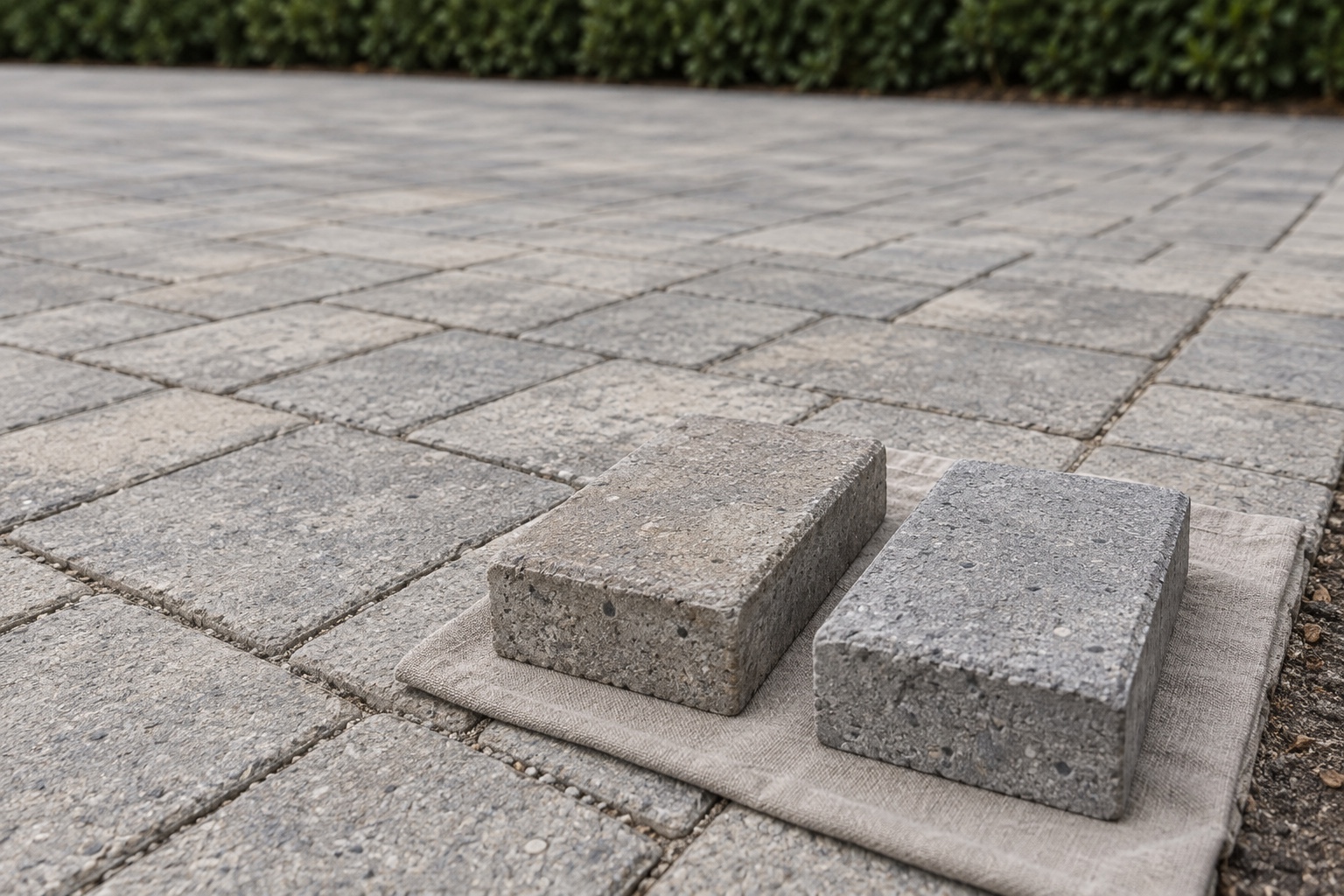
Hero: AI illustration, not actual company samples, a project photograph or a field test.
To match new pavers to an existing driveway, identify the installed units and compare physical samples against a prepared area of the driveway before ordering. Check dimensions, thickness, edge profile and texture alongside color. If an exact blend is unavailable, agree on acceptable contrast, a deliberate border or a defined section of replacement. Have a contractor confirm suitability for driveway use and the existing installation. Neither a similar color nor future weathering guarantees an invisible repair.
For driveway pavers in Palm Beach Gardens, the useful starting point is the actual surface at your home. A broken unit and a small added area raise different scope questions, even when both begin with the same search for matching material.
Identify the installed units before shopping
Gather an old invoice, manufacturer label, delivery paperwork or an unused spare block. These can give a supplier something more precise than a photograph of gray rectangles. If the product cannot be identified confidently, record that uncertainty instead of approving an assumed match.
Ask the contractor and supplier to check:
- Product identity: manufacturer, range, shape and color blend, where records establish them.
- Physical fit: actual length, width and thickness, plus the edge profile and surface texture.
- Pattern compatibility: whether the available shapes work with the existing layout and its visible joints.
- Current supply: whether the identified product is available in the needed quantity, and what the supplied sample represents.
When a supplier offers an alternative, ask what differs from the original unit instead of accepting “closest available” as a specification. For a blended product, review a representative selection from the available material. One unusually close sample is not enough to approve the range that could arrive.
A similar color does not establish suitable dimensions or vehicle use. The contractor should assess loads, levels and base conditions before deciding whether the proposed units and scope are feasible. Appearance approval cannot substitute for that assessment.
If the concern includes movement or unevenness as well as discoloration, our guide to paver cleaning and repair in Palm Beach Gardens helps frame what needs assessment before surface treatment. Do not let a color discussion hide the reason units need attention.
Compare samples against a fair reference
A phone photo is useful for an initial conversation, but insufficient for final approval. Bring physical samples to the property and view them beside the area that will remain. Compare dry with dry and wet with wet; look in sun and shade when those conditions occur. Record which condition informed your decision instead of approving whichever photograph looks closest.
First agree how the existing comparison area will be prepared. In its Cleaning, Sealing and Joint Sand Stabilization of Interlocking Concrete Pavement, CMHA explains that cleaning can change color and recommends testing a small area first. It also describes differences in sealer appearance and notes that replacement units can differ visibly from existing ones. A dirty surface or an untested finish is therefore a poor basis for a purchase decision.
Keep paver cleaning and sealing separate from material supply and installation in the proposal. Decide whether maintenance is needed to establish a fair reference, is part of the finished work, or is outside this project. Sealer should not be sold as a promised color-match fix. If a finish is proposed, ask to evaluate its appearance on both the retained and proposed material before committing.
Define the variation you can accept
CMHA’s Operation and Maintenance Guide for Interlocking Concrete Pavement explains that weathering, wear and stains can make installed units look different from stored spares. It recommends retaining undamaged units and distributing replacements among existing units to reduce obvious variation. Discuss whether that approach is appropriate for your scope; it does not establish what you personally must accept.
Judge the comparison from the street, your usual walking route and close range. A slight shade difference may be acceptable while a different edge or texture draws your eye every day. Name the issue precisely: warmer color, sharper edges, smoother face or a conspicuous boundary. Do not approve a mismatch only because someone expects the materials eventually to weather identically.
Choose the smallest scope that delivers an acceptable result
Localized replacement
Replacing only damaged or unsuitable units preserves more of the existing driveway. It suits a homeowner who accepts the demonstrated variation and whose contractor confirms that the limited work is feasible. The tradeoff is that individual replacements may remain noticeable, especially in a prominent location. Ask which units will be retained, which will be replaced and how the proposed arrangement will look. A small scope still needs a clear appearance decision.
Deliberate contrast or a border
A contrasting border or clearly separated added area can make a difference look intentional. Consider this when a convincing match is unavailable but you like the driveway you have. The tradeoff is a design change, potentially involving more material and installation than isolated replacement. Ask the contractor to show where the new treatment starts and stops, how it relates to the existing pattern, and whether the physical transition works. Approve the whole arrangement, not one attractive block.
A wider, defined section
Replacing a coherent section can move the transition to a boundary you prefer. This may suit clustered damage or a location where scattered replacements would be distracting. The tradeoff is a broader scope, with more existing material disturbed and a new section that may still contrast with the rest. Have the contractor identify the proposed boundary on site. Ask why that boundary improves the result and what additional work it introduces. An unavailable blend alone is not a reason to replace the entire driveway.
For a consultation through our driveway pavers installation service, bring your product records and identify the area that concerns you. Ask to compare these scope options on site, with material compatibility, retained areas and visible transitions addressed before choosing what to order.
Decide which existing units to retain
The decision for your property is which units are serviceable, which need replacement, and what appearance you will approve alongside them. Maintenance of existing units does not establish that replacement pavers will match.
Approve the scope before authorizing the order
Leave the sample review with a written decision that covers more than a color name:
- The material: record the identified product, dimensions and finish. Confirm availability with the supplier and specify whether any substitution requires your approval.
- The reference: identify the physical sample and the prepared existing area used for comparison. Keep photographs as supporting records, not the sole approval evidence.
- The boundaries: mark retained units, replacement areas and any border or added section. Ask who confirms compatibility, levels and the condition of the supporting installation.
- The work: distinguish maintenance, material supply and installation. Record accepted visible differences, unresolved questions and who authorizes changes if the agreed material cannot be supplied.
Request a driveway consultation in Palm Beach Gardens with your records, spare block information and preferred scope. Ask for an on-property sample comparison and a proposal identifying what stays, what changes and what contrast remains. Approve those details before ordering so the finished driveway reflects a decision you made knowingly.